- Home
- Products
- About Us
- Application
- Custom
- News
- Contact Us
Leave Your Message
-
Contact Email
The global marine aftermarket is undergoing a decisive technological transition. For decades, natural teak (*Tectona grandis*) stood as the undisputed benchmark for marine decking. However, escalating CITES regulations, severe deforestation embargos, volatile timber pricing, and exorbitant maintenance overheads have forced naval architects, shipyards, and private vessel owners to seek advanced alternatives.
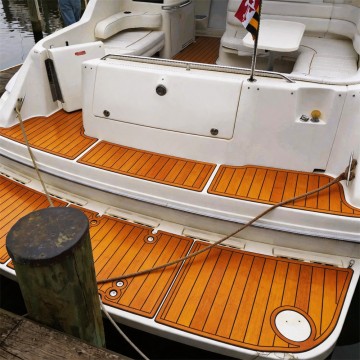
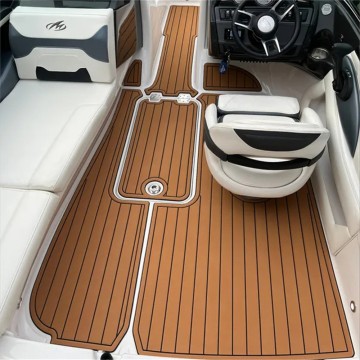
In contemporary boat refit and deck upgrade projects, **faux teak marine flooring**—formulated through co-polymerized closed-cell Ethylene-Vinyl Acetate (EVA) and Polyethylene (PE)—has emerged as the premier structural alternative. Unlike organic wood which splits, checks, greys, and requires bi-weekly scrubbing and harmful chemical sealers, engineered synthetic teak provides identical aesthetic prestige with superior thermodynamic and mechanical advantages.
A typical 40-foot motor yacht retrofitted with faux teak reduces deadweight by over 180 kg compared to 12mm solid timber, lowering fuel consumption while eliminating recurrent resealing and caulking replacement costs entirely.
Furthermore, the surge in pre-owned boat transactions has made deck modernization the single highest return-on-investment (ROI) refurbishment. Survey data indicates that replacing weathered non-skid diamond gelcoat or peeling marine carpet with customized faux teak increases secondary resale valuation by up to 14%, while reducing dockside listing times by nearly half.
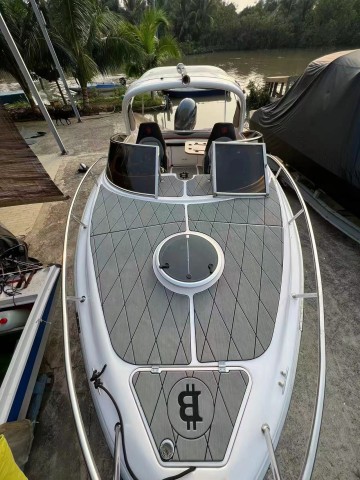
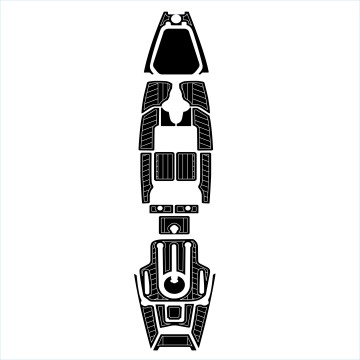
With modern digitized scanning (using 3D laser digitizers or Proliner systems), boat refits no longer require weeks of manual templating on site. CNC routing platforms ingest digital vector files to mill complex edge bevels, geometric seam tracks, bespoke yacht logos, and integrated measurement rulers within hours, delivering an exact millimeter-grade fit ready for direct peel-and-stick application.
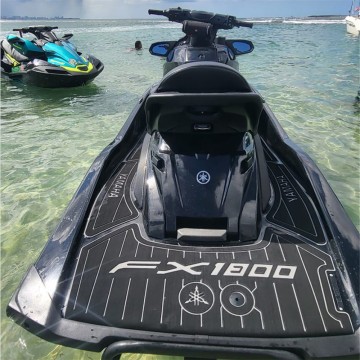
Whether the vessel is a retro 90s Sea Ray Sundancer, a center-console tournament fishing rig, or a luxury catamaran cruiser, faux teak foam pads have fundamentally redefined the lifespan, safety, and sensory comfort of the marine cockpit environment.
| Performance Characteristic | Natural Teak Wood (12mm) | Heavy PVC Synthetics | Closed-Cell EVA/PE Faux Teak |
|---|---|---|---|
| Areal Weight (kg/m²) | 8.5 – 11.0 kg/m² High Draft Load | 5.5 – 7.2 kg/m² Moderate | 1.2 – 1.6 kg/m² Ultra Lightweight |
| Surface Temperature (Midday Sun) | Extremely Hot (>62°C) | Severe Heat Retention (>68°C) | Comfortable Thermals (38°C–46°C) |
| Wet Coefficient of Friction (COF) | Moderate (Slippery with Algae) | High (When clean) | Maximum (Micro-Textured Closed Cell) |
| Fluid & Blood Absorption | High Porosity (Stains permanently) | Impermeable (Stains joints) | Zero Absorption (Closed Cell) |
| Installation Complexity | Screws, epoxy beds, 14–21 days | Solvent welding, heavy clamps | 3M™ Direct Pressure Adhesive (1–2 days) |
| Annual Maintenance Overhead | High (Acid washing, teak oils) | Moderate (Power scrubbing) | Near Zero (Mild soap & freshwater rinse) |

Our proprietary formulations and manufacturing standards exceed global marine certifications, delivering a flooring solution engineered to withstand brutal marine environments.
Closed-cell means that Nauteva floors will not absorb liquids. This includes water, colored drinks, blood of any kind, as well as any odors.

Even when completely wet, Nauteva flooring is 100% non-slip, adding safety to boarding and navigating underway, as well as enhancing your overall boating experience.
You can expect your boat to look and feel 10 years newer once you install Nauteva. Give your boat a facelift with a custom design and refresh the right way.
Your feet will thank you. Once you have Nauteva on your boat, you will wonder how you did without it.
Our proprietary blend is mixed with foam and polyethylene to provide more durability and protection than anything on the market.
We promise to only use the very best materials. We don’t offer less expensive options because they simply won’t hold up over time on the water. All of our materials utilize 3M pressure-sensitive adhesive because it’s guaranteed to last.
From tournament offshore battlewagons to luxury liveaboard cruisers, discover how bespoke faux teak solves operational challenges across distinctive nautical sectors.
In offshore game fishing, cockpits are exposed to bait fluids, fish blood, and high-pressure washdowns. Closed-cell EVA faux teak prevents fluid penetration, provides critical lumbar fatigue relief during 10-hour trolling sessions, and dampens hull vibrations that frighten trophy fish.
Vintage cruisers often suffer from oxidized, chalking gelcoat or cracked teak-look fiberglass. Retrofitting swim steps, flybridges, and aft cockpits with dual-density faux teak restores pristine superyacht styling, protects against dropped anchors, and stays cool under bare feet in tropical ports.
Watersports craft undergo rapid wet-and-dry cycles with relentless foot traffic on swim decks and engine hatches. Our brushed anti-slip texture provides unmatched traction for boarders securing wakeboards and jet skiers boarding in choppy swells.
Passenger safety and liability reduction are paramount. High-traffic commercial craft utilize our high-density 65-durometer PE foam formulations to satisfy maritime slip-resistance mandates while eliminating deck refinishing downtime during peak tourist seasons.
Weight aloft and on deck directly impairs sailing stability and righting moments. Faux teak delivers the warmth and tactile feel of traditional yacht joinery without the punishing ballast penalties or need for abrasive sandpaper and teak bleaches.
Beyond the marina, rugged expedition vehicles, toy haulers, and custom vans deploy marine faux teak in outdoor pull-out kitchens, wet baths, and entryway platforms to resist mud, gravel, and extreme thermal swings without delamination.
How our digitized scanning and multi-axis CNC routing pipeline takes your vessel deck from raw measurements to flawless marine-grade installation in five systematic stages.
Precision digitizers capture complex cockpit geometry, hatch reveals, and hardware clearances with 0.5mm accuracy.
Digital files are optimized for plank spacing, perimeter margins, laser logos, fish rulers, and custom beveled edges.
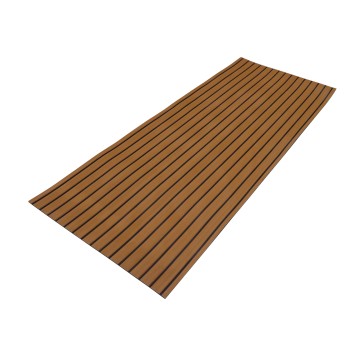
High-speed industrial CNC routers mill dual-color laminate sheets, revealing the contrasting bottom teak seam color.
Decks are degreased and cleaned with acetone or isopropyl alcohol to establish a high-energy surface bonding profile.
Backing release liners are rolled into place with weighted rollers, activating the high-shear structural acrylic adhesive.
State-of-the-art foam polymerization, automated laminating lines, and dedicated engineering specialists supporting global marine refit partners.
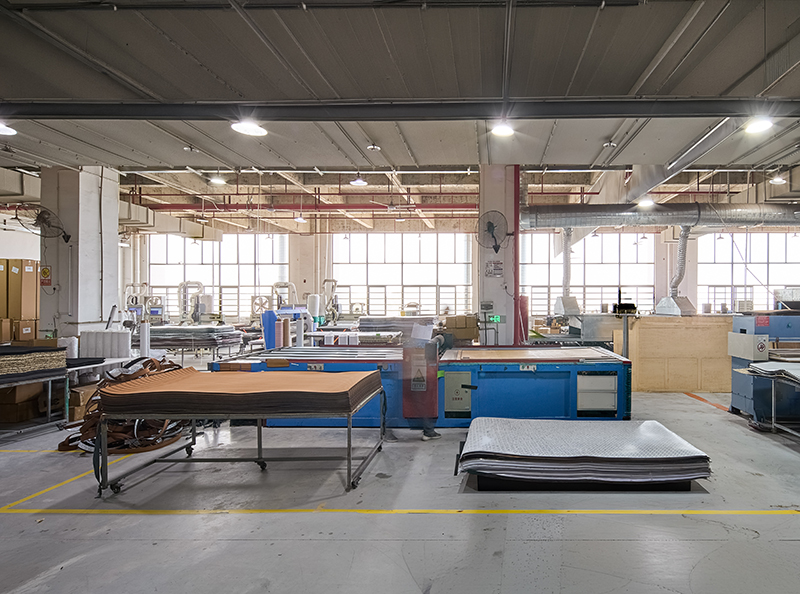
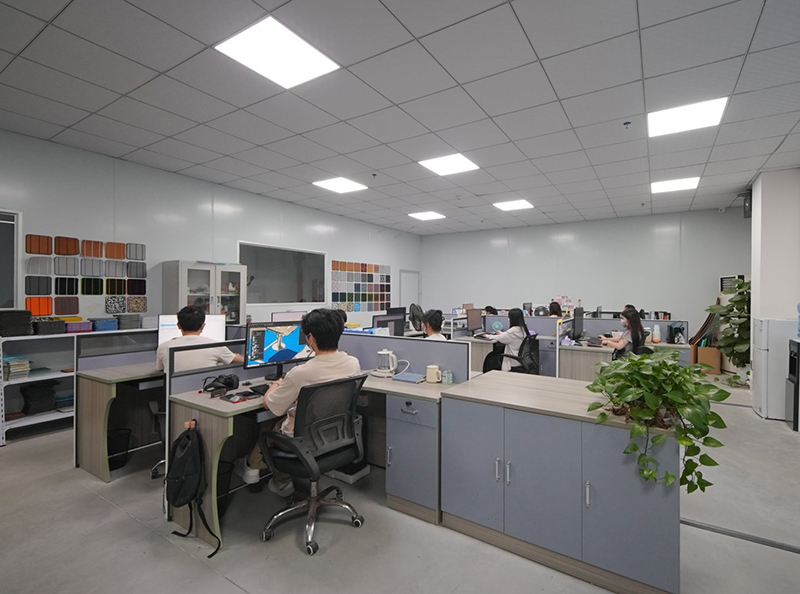
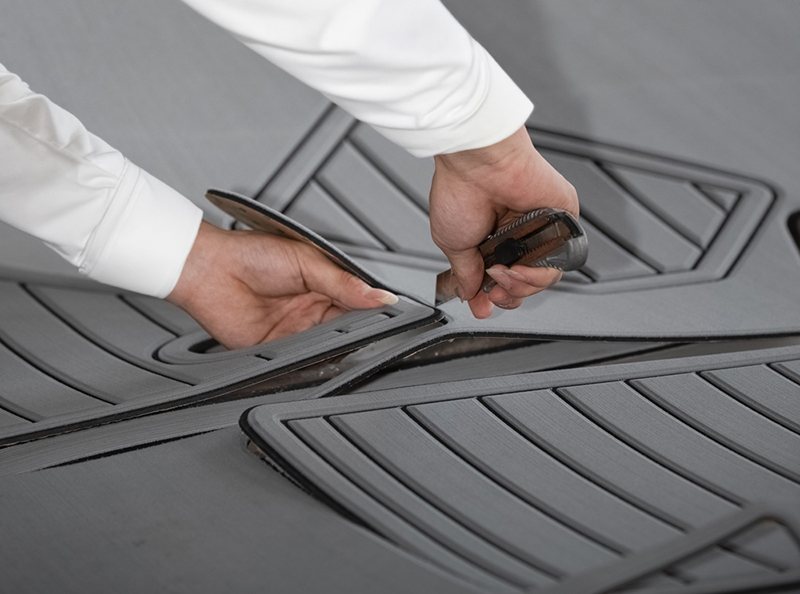
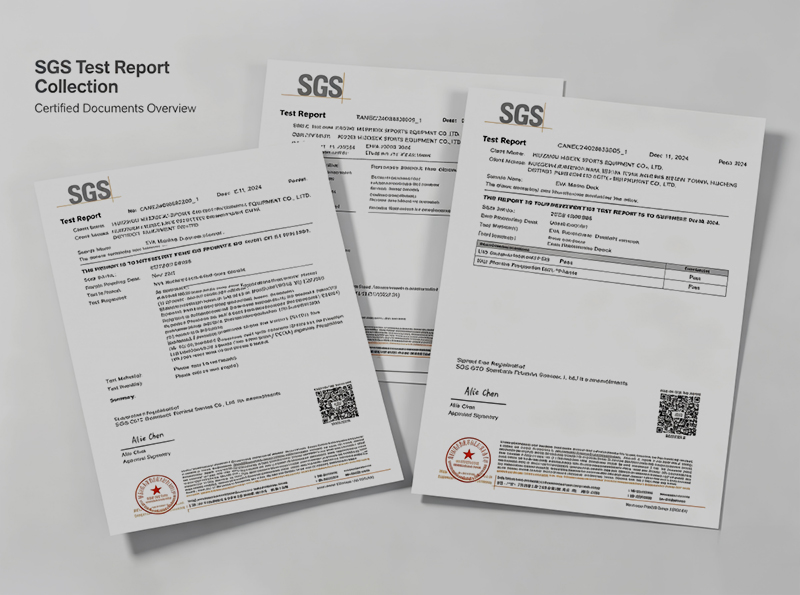
We can provide you with surface protection pads that are anti slip, waterproof, heat-insulating, earthquake resistant, and aesthetically pleasing on any object.

Crucial technical and architectural considerations when upgrading your vessel with synthetic EVA/PE closed-cell flooring systems.
Our closed-cell marine formulas incorporate specialized hindered amine light stabilizers (HALS) and premium UV inhibitors. This molecular formulation resists chalking, hardening, shrinking, and color fading for up to 3,000 continuous hours of intense QUV testing, maintaining structural integrity in equatorial sun zones.
Yes. The proprietary 3M™ pressure-sensitive acrylic adhesive layer features high structural wet-out characteristics. It flows microscopic distances into the crevices of molded gelcoat diamond patterns, establishing a continuous hermetic seal that blocks moisture intrusion underneath the pads.
Because the co-polymer is 100% closed-cell, fluids cannot soak inside the internal foam matrices. 95% of spills rinse off immediately with freshwater and deck soap. For stubborn grease or dried blood, a medium-bristled deck brush with household bleach-free cleaner or all-purpose degreasers restores the pristine color easily.
Under standard recreational operating conditions with basic seasonal maintenance, high-density faux teak decking provides a predictable 5 to 8+ year operational lifecycle. If an individual section is damaged mechanically by a dropped gaff or anchor flukes, that single panel can be removed and CNC-recut without disturbing adjacent deck surfaces.