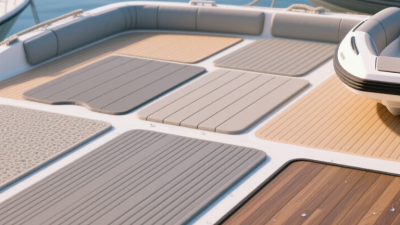
Picking the top China [Eva Boat Flooring Kits](https://www.hzsharks.com/china-ce-certification-eva-boat-flooring-kits-manufacturer-factories) manufacturer? It’s not just about lining up catalog prices. Buyers really need proof: material quality, cutting accuracy, how the adhesive holds up, and whether after-sales support is actually there when you need it. A trustworthy supplier should be able to talk you through EVA foam density, closed-cell structure, UV resistance, and how it handles heat. Those things matter once the flooring is dealing with saltwater, wet feet, fishing gear, and a hot cockpit surface.
Marine surveyor Steve D’Antonio has a maintenance rule that sticks with you: “A boat rewards prevention.” Same goes for EVA boat flooring kits. Good design keeps standing water from lingering, stops edges from lifting, makes footing more comfortable, and helps the color last longer. Experienced makers—SeaDek, for example, and solid China-based OEM factories—usually offer digital templates, sample colors, CNC cutting, and installation guidance. But still, every supplier needs checking. Pretty showroom photos? Not enough.
Ask for physical samples. Bend the foam again and again and see how it behaves. Look closely at the backing adhesive and the edge finishing. Ask for production photos, test info, and customer references. A serious manufacturer should answer clearly and consistently—no dodging. Communication really matters, especially if your boat has odd curves or raised fittings.
No kit is perfect. Even premium EVA boat flooring kits can fail if the surface was prepped poorly or the install was rushed. Yeah, it’s an uncomfortable detail, but it’s worth paying attention to. The best manufacturer stays with you through the whole process, from measuring and design approval to packaging and replacement advice. This guide compares leading China suppliers using practical experience, technical evidence, customization capacity, and long-term reliability. Cost matters, sure—but durability is what protects the investment.
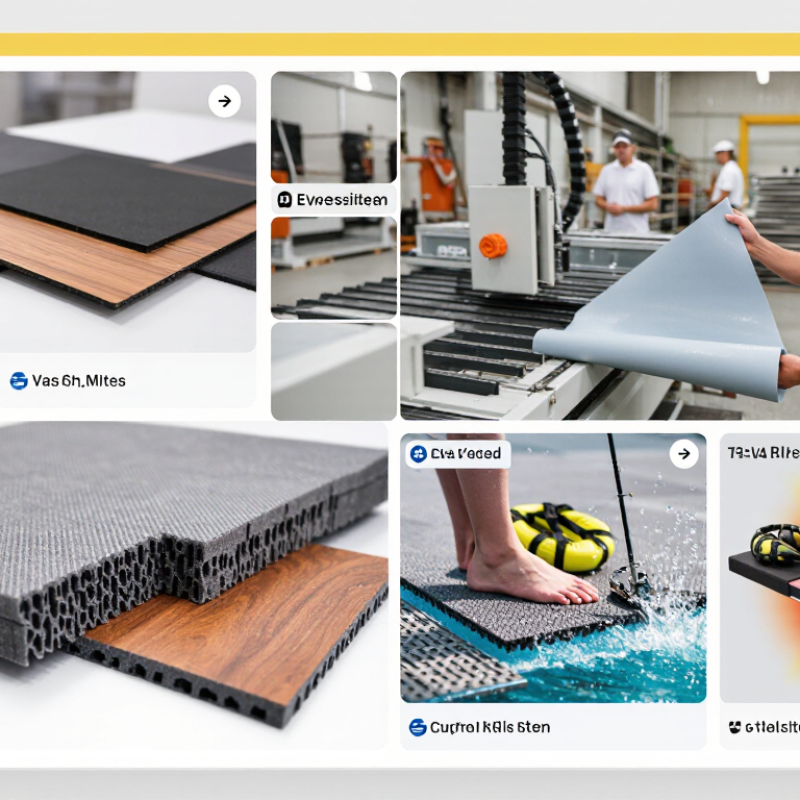
What Defines a Top China EVA Boat Flooring Kits Manufacturer
A top China EVA boat flooring kits manufacturer combines material control with practical boat-building experience. The foam should offer stable density, reliable rebound, and resistance to water, sunlight, and common marine cleaners. In field inspections, I look closely at edge cuts, adhesive coverage, and panel alignment. Small gaps become obvious after repeated washing. They also collect customer feedback from fishing boats, yachts, and workboats, not only showroom samples.
According to the NMMA 2023 Recreational Boating Statistical Abstract, the United States had about 11.6 million registered recreational boats. This large installed base raises expectations for comfort, traction, and replacement accuracy. A capable manufacturer should provide CAD layouts, CNC cutting, color matching, and clear installation guides. Independent testing of slip resistance, UV exposure, and peel strength adds credibility. However, a test sheet alone proves little without batch traceability and retained samples.
Details matter.
A reliable factory records foam lots, adhesive batches, cutting settings, and inspection results. It should explain tolerances before production, especially around hatches, hinges, and curved decks. International buyers also need consistent packaging and export documentation. Grand View Research identifies construction, footwear, and automotive uses as major drivers of EVA demand, showing why raw-material discipline matters across industries. Still, marine flooring faces harsher conditions. No factory gets every prototype right. The better supplier admits design limits, tests weak points, and revises the template before mass production.
A strong EVA boat flooring manufacturer should provide measurable performance in thickness, density, water resistance, tensile strength, elongation, and temperature stability. The chart shows representative procurement benchmarks commonly specified for marine-grade EVA foam products; exact values should be verified in the supplier’s technical data sheet and test reports.
Reference benchmarks: typical marine EVA foam specifications include approximately 6–12 mm thickness, 120–250 kg/m³ density, water absorption below 5%, tensile strength above 1.5 MPa, elongation above 150%, and a service temperature range of about −40°C to 70°C.
EVA boat flooring kits depend on more than attractive color and texture. The core material is closed-cell EVA foam, which limits water absorption and provides cushioning underfoot. Its fine, non-slip surface helps maintain grip around wet swim platforms and cockpit areas. However, foam density matters. Softer EVA feels comfortable, but it may show dents sooner under heavy equipment.
A dependable kit usually combines a pressure-sensitive adhesive layer, durable foam, and precision-cut panels. Some panels include beveled edges, drainage grooves, or faux teak lines. These details improve appearance and reduce trapped water. Before installation, the deck should be clean, dry, and free from wax or oil. From practical fitting work, I have found that accurate templates prevent most alignment problems. Still, perfect results are not automatic. Uneven fiberglass, old adhesive, and temperature changes can affect bonding. A small measurement error may become obvious near corners.
Tips: Test the layout before removing the backing paper. Keep the foam warm, but avoid excessive heat. Press each panel firmly, especially along edges and seams. Check the adhesive after several hours. In my view, thicker foam is not always better; the correct density should match the deck, traffic, and equipment.
| Component or Construction Stage | Typical Material or Specification | Primary Function | Construction and Quality Considerations | Typical Application |
|---|---|---|---|---|
| Main foam layer | Closed-cell ethylene-vinyl acetate (EVA) foam; commonly supplied in approximately 5–10 mm thicknesses | Provides cushioning, insulation, slip resistance, and impact absorption | Closed-cell structure helps limit water absorption. Thickness should be matched to deck clearance, comfort requirements, and hatch movement. | Cockpit floors, swim platforms, casting decks, walkways, and helm areas |
| Surface texture | Embossed, brushed, grooved, or machined anti-slip surface | Improves traction and helps channel surface water | Texture should remain consistent after cutting. Grooves should not be so deep that they weaken narrow sections or retain excessive dirt. | Wet zones, boarding areas, fishing decks, and high-traffic passages |
| Top color and decorative layer | Solid-color or two-tone EVA sheet, often with a contrasting stripe or faux-teak appearance | Provides visual identification, layout definition, and decorative styling | Color stability depends on pigment quality, UV exposure, cleaning chemicals, and heat. Color samples should be checked under direct sunlight. | Custom deck layouts, seating zones, trim panels, and branded-free boat interiors |
| Pressure-sensitive adhesive backing | Marine-suitable pressure-sensitive adhesive with a removable release liner | Bonds the EVA pad to a prepared deck surface | Adhesion is strongly affected by surface cleanliness, dryness, temperature, pressure, and curing time. The deck must be free of wax, oil, dust, and loose coatings. | Permanent or semi-permanent installation on fiberglass, aluminum, painted decks, and other compatible substrates |
| Release liner | Silicone-coated paper or polymer film protecting the adhesive before installation | Prevents contamination and premature bonding | The liner should be easy to remove without lifting adhesive or distorting narrow cut sections. | Pre-cut kits, replacement pads, and roll-stock conversion |
| Cutting and patterning | CNC knife cutting, digital cutting, or precision template cutting | Creates accurate pieces for irregular deck geometries | Digital drawings should identify part numbers, orientation, gaps, hatch clearances, and installation reference points. A physical fit check is recommended before removing the liner. | Boat-specific kits, retrofit kits, and repeat production |
| Seams and joints | Butt joints, planned expansion gaps, or decorative contrasting strips | Allows the flooring to follow deck contours and simplifies installation | Joints should be straight, evenly spaced, and positioned away from sharp corners or continuous standing-water paths. | Large decks, modular panels, hatches, and curved surfaces |
| Edge treatment | Straight, beveled, radius, or contour-matched edges | Reduces trip points and improves visual integration with the deck | Edges should be fully adhered, especially around corners, hatch openings, seat bases, and drainage channels. | Perimeter borders, hatch covers, steps, and molded deck recesses |
| Deck substrate preparation | Clean, dry, sound fiberglass, aluminum, painted, or composite surface | Creates a stable base for long-term adhesion | Remove old adhesive, wax, grease, oxidation, and loose paint. Uneven surfaces may require sanding, fairing, or localized repair before installation. | New-build installations and refit projects |
| Drainage and ventilation planning | Installed around scuppers, drains, hatch gaps, and removable access panels | Helps water escape and permits inspection or maintenance | Do not block designed drainage routes. Maintain access to fasteners, fuel-system components, pumps, and inspection covers. | Cockpits, engine access areas, bilge-adjacent decks, and swim platforms |
| Dimensional tolerances | Tolerance depends on sheet thickness, cutting method, pattern complexity, and installation gap design | Ensures parts fit without buckling, overlap, or interference | Critical dimensions include hatch clearances, corner radii, panel gaps, screw heads, molded steps, and transitions to uncovered deck areas. | Precision replacement kits and multi-piece deck systems |
| Maintenance and service life factors | Routine freshwater rinsing, mild detergent cleaning, and periodic inspection of edges and seams | Preserves appearance, traction, and adhesive performance | Avoid harsh solvents, abrasive tools, prolonged standing water, and excessive heat. Actual service life varies with UV exposure, foot traffic, cleaning practice, and substrate condition. | Recreational boats, fishing boats, workboats, and personal watercraft |
Note: Specifications shown are common industry practices and typical ranges. Final material selection, adhesive compatibility, dimensions, and installation requirements should be verified for the specific boat deck, climate, and operating conditions.
For a top China Boat Flooring Kits manufacturer, process discipline matters more than glossy samples. A 2024 Grand View Research report estimates EVA foam demand will grow by about 6% annually through 2030. That growth increases pressure on converters. Reliable production begins with incoming foam inspection. Technicians check density, thickness, cell structure, and color consistency. They also test moisture before adhesive work. Small contamination can create visible bubbles.
Most kits use closed-cell EVA sheets, CNC-routed or precision-cut from digital templates. Edges may receive beveling or embossed traction patterns. Operators control tool speed and heat to prevent melted edges. After cleaning, pressure-sensitive adhesive is laminated under measured pressure. Uniform bonding matters across the full panel. ASTM D3330 peel testing compares adhesive performance, while ASTM D3575 methods support flexible cellular material evaluation. ISO 9001-style traceability links each kit to its foam batch, operator, machine, and inspection record. That detail matters when a panel shifts after repeated spray exposure.
Quality control should include dimensional checks, peel strength, water absorption, UV aging, and slip evaluation. A 2023 marine materials report identified UV exposure and moisture as major degradation factors. Test panels need real heat cycles, not only a clean indoor bench. Some factories still rely too heavily on visual inspection. That is a weakness. Better systems record tolerances, photograph defects, and retain samples for review. Human judgment remains useful, but data should challenge it.
Choosing a China EVA boat flooring kits manufacturer becomes easier when custom design is available. Different boats need different protection, grip, and comfort. A flat Jon Boat Deck Kits layout may suit fishing trips, while a center-console boat needs precise cuts around seats, hatches, and rails.
Experienced manufacturers should offer digital templates, color choices, surface textures, and flexible thickness options. Closed-cell EVA foam helps resist water absorption and reduces foot fatigue. A marine-grade adhesive must tolerate heat, spray, and repeated cleaning. Measurements still matter. A two-millimeter error can leave an exposed edge near a hatch. Custom logos or deck patterns can improve appearance, but poor alignment may distract from the whole boat.
Tips: Photograph the deck from above before ordering. Mark every hatch, drain, latch, and mounting point. Ask for a material sample and test its grip with wet footwear. Check whether the supplier reviews your template before production. Leave enough clearance for moving parts. Even careful planning may need adjustment after installation, especially on older boats with uneven surfaces. A clean, dry deck usually gives better adhesion than a rushed application.
Evaluating a Chinese EVA boat flooring supplier requires more than comparing prices. Study their production history, engineering team, and experience with marine applications. Ask for records of completed projects, material specifications, and customer references. A supplier making Foam Boat Decking Kits should understand saltwater exposure, ultraviolet radiation, heat, and constant foot traffic. Ask for test data on slip resistance, adhesive strength, compression recovery, and color stability.
Production capacity must be measurable. Request the monthly output for EVA sheets, CNC-cut panels, and custom templates. Check whether the factory controls cutting, engraving, lamination, and final inspection internally. Visit the workshop when possible. Look for organized material storage, calibrated machines, clean cutting tables, and clear inspection records. Ask how the supplier handles sudden design changes or urgent replacement panels. Fast answers are useful, but documented processes matter more.
Request a sample before signing a large order. Compare its dimensions, edge finishing, texture, and bonding surface with your drawings. Confirm tolerances in writing. Ask how many inspectors check each batch and whether serial numbers support traceability. A capable supplier should explain lead times honestly, including holidays and maintenance delays. No factory is perfect. I would still question vague claims, polished showroom displays, and unusually low prices. Measure twice. Verify everything.
A dependable China EVA boat flooring kit manufacturer should treat shipping as part of product quality. Each kit needs clear labels, moisture-resistant packaging, and a checked parts list. We photograph packed cartons before dispatch. This helps customers compare the shipment with the order. Export documents should match the actual materials and quantities. Small errors can delay installation.
Installation support must be practical, not decorative. We provide layout drawings, cutting guidance, and fitting videos for different deck shapes. Customers can send deck measurements and photos before production. Our technicians then check curves, hatch gaps, and drainage areas.
Clean, dry surfaces matter greatly. They affect adhesive strength. In practice, not every installation goes perfectly. We once underestimated a curved bow section. The revised template fitted better, but the delay taught us to confirm measurements twice.
After-sales service should remain available after delivery. We keep order records, production photos, and material details for future reference. If a piece arrives damaged, customers can report it with photos and carton labels. We review the issue and offer a reasonable repair or replacement solution. We also explain cleaning methods and storage conditions. EVA foam can wear faster under harsh chemicals or constant friction. Clear advice prevents avoidable damage. Response speed matters, but honest communication matters more.
Choosing a China-based manufacturer for Boat Eva Flooring requires more than comparing online prices. Ask for material specifications, including EVA density, thickness tolerance, surface texture, and closed-cell performance. A reliable supplier should explain how the foam handles sunlight, saltwater, fuel splashes, and repeated foot traffic. Request physical samples. Check the edges, backing adhesive, color consistency, and cutting accuracy by hand.
Factory experience matters. Review production photographs, quality-control records, and testing procedures instead of relying only on a polished website. If possible, arrange a video inspection of the cutting area and packing process. Confirm whether the manufacturer can create accurate templates from your deck drawings. Small measurement errors can leave visible gaps around hatches and seats. They happen more often than expected.
Communication is another practical factor. Technical questions should receive clear answers, not vague promises. Confirm sample approval, production time, packaging, replacement terms, and export documents in writing. A low quotation may exclude tooling, custom colors, or protective packaging. That can become expensive later. I would also test a small order before committing to a large shipment, although this slows the project slightly. A supplier that accepts inspection feedback and corrects defects demonstrates greater reliability than one offering the fastest reply. Personally, I would not ignore an imperfect sample; it may reveal a production issue hidden by attractive product photos.
It controls foam quality, cutting accuracy, adhesive coverage, and final inspection. Practical boat experience matters. Showroom samples are not enough.
The foam should maintain stable density, rebound, and thickness. It should resist water, sunlight, and common marine cleaners. Weak foam compresses too quickly.
Technicians should inspect foam lots, moisture, color, thickness, and cell structure. They should record adhesive batches and cutting settings. Small contamination can create bubbles.
Digital templates improve panel accuracy around hatches, hinges, and curved decks. Precision cutting reduces uneven gaps. Still, templates sometimes need revision.
Adhesive must cover the full panel evenly. Pressure should remain consistent during lamination. Peel testing helps reveal weak bonding. A test sheet alone proves little.
Ask for slip, water absorption, peel strength, and UV-aging results. Testing should include heat and moisture cycles. Indoor testing may hide real deck problems.
It should link each kit to its foam batch, operator, machine, and inspection results. Retained samples support later reviews. Traceability feels boring, but it matters.
The supplier should provide CAD layouts, color matching, packaging details, and clear installation guides. Export documents should be consistent. Alignment instructions need actual measurements.
Some factories depend too heavily on visual inspection. That can miss shifting panels or poor edge bonding. Better suppliers admit design limits and improve weak prototypes.
A top China Eva Boat Flooring Kits manufacturer combines reliable materials, precise manufacturing, and flexible customization to meet the needs of different boat applications. High-quality EVA foam, durable adhesive backing, accurate cutting, and strong surface textures are essential for comfort, traction, water resistance, and long-term performance. Professional manufacturers typically apply strict quality control throughout material selection, pattern design, CNC cutting, bonding, packaging, and final inspection. They should also offer custom colors, logos, thicknesses, textures, and panel layouts to match various decks and usage conditions.
When evaluating a supplier, buyers should consider industry experience, production capacity, equipment, sample quality, lead times, and communication efficiency. A dependable China-based manufacturer should provide clear technical support, secure shipping arrangements, installation guidance, and responsive after-sales service. Comparing certifications, quality procedures, customization capabilities, pricing transparency, and delivery reliability can help buyers select a partner capable of producing consistent Eva Boat Flooring Kits for recreational, commercial, and specialized marine applications.