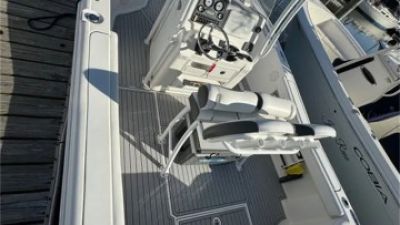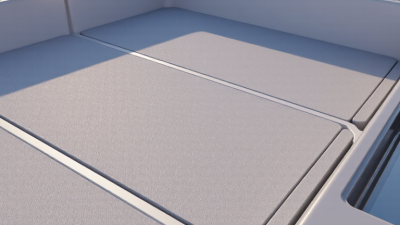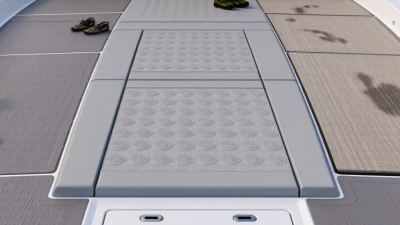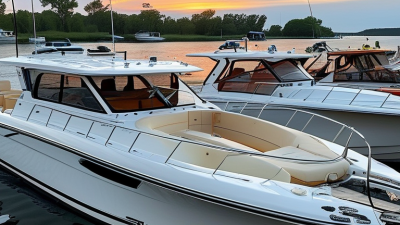
China’s boat-building industry is really shifting gears—from just focusing on low-cost manufacturing to now specializing in high-quality marine parts and custom interior solutions. You might have seen Boat Deck Mats that aren’t just for looks—they now provide comfort, better grip, noise reduction, and surface protection on all kinds of boats, like fishing boats, yachts, pontoons, and personal watercraft.
Over in the U.S., the 2023 Recreational Boating Statistical Abstract from the National Marine Manufacturers Association estimates there are around 11.6 million registered recreational boats. The data also shows a steady demand for replacement parts, accessories, and maintenance supplies. This is pretty important because those deck mats aren’t just fancy upgrades—they’re consumables that need replacing over time. Plus, according to Grand View Research, materials like EVA foam, PVC, and synthetic teak are big players in modern marine flooring.
Choosing the right material really does matter.
Looking at China’s top 10 boat deck mats manufacturers, it’s not just about how big their factories are. I also check out things like EVA density, closed-cell performance, how reliable their adhesives are, CNC cutting precision, drainage systems, UV resistance, and whether they can customize. Experience with OEM projects is a big plus, too. Sure, a supplier might seem cheap, but if they can’t match colors well or if the bonding isn’t strong, those little issues can turn into costly headaches down the road.
My assessment is based on what companies share publicly—things like product specs, export experiences, and what’s needed to meet industry standards. I also pay attention to whether they clearly explain their testing methods because that info is sometimes overlooked but really important. Keep in mind, no ranking is perfect. Production quality can vary between batches and applications, so it’s always smart to ask for samples, technical datasheets, and even independent tests before you place a big order.
The Chinese manufacturers I highlight here each bring something unique to the table—whether it’s custom fabrication, quick sampling, private labeling, or international shipping. All together, they make a solid starting point for distributors, boatyards, retailers, or just boat owners looking for reliable deck surface solutions.
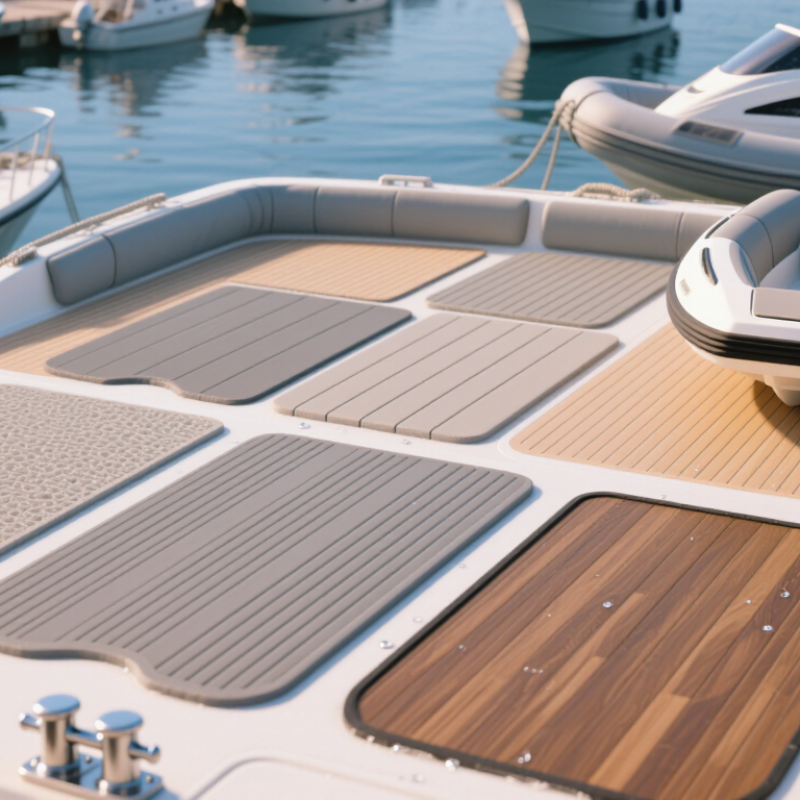
Boat deck mats are fitted flooring products that improve grip, comfort, and surface protection on boats. They commonly use closed-cell EVA foam, PVC, rubber, or marine-grade woven materials. EVA remains popular because it is lightweight, water-resistant, and easy to cut around hatches and seats.
Closed-cell EVA foam cushions bare feet and reduces vibration underfoot. Its textured surface can improve traction when the deck is wet, although dirt may collect inside the grooves.
PVC mats usually offer stronger abrasion resistance, while rubber provides firm grip but adds weight.
A 2023 NMMA Statistical Abstract recorded 11.6 million registered recreational boats in the United States. That large installed base supports continued demand for practical deck upgrades. Grand View Research also identifies marine flooring and composite materials as growth areas linked to boat refurbishment and lightweight construction.
The deck should be cleaned, dried, and checked for oil before applying adhesive-backed mats. Rounded edges reduce lifting. Light-colored surfaces may feel cooler in direct sunlight, but they can show stains faster.
Swimming Pool Deck Eva Mats share similar properties, yet boat mats require stronger attention to saltwater exposure, drainage, and repeated flexing. I would not describe EVA as indestructible. Poor bonding, sharp fishing equipment, and prolonged ultraviolet exposure can shorten its service life. Testing samples first is sensible, especially on textured aluminum or aging fiberglass.
China’s boat deck mat industry developed from small workshops into a specialized manufacturing sector. Early producers mainly supplied basic rubber and foam sheets for local boat builders. Their products were affordable, but color choices, cutting accuracy, and adhesive performance varied widely. Demand from export markets changed this situation.
Manufacturers began investing in CNC cutting, waterjet equipment, and computer-controlled engraving. These tools helped create accurate panels for cabins, swim platforms, and cockpit floors. Production teams also improved closed-cell foam formulations, which resist water absorption and reduce surface heat. Factory quality checks now commonly include thickness measurement, peel testing, color inspection, and dimensional comparison against digital drawings.
The shift was not flawless. Some early export batches showed uneven bonding around curved edges. Others faded after long exposure to strong sunlight. These failures pushed suppliers to test UV resistance, saltwater exposure, compression recovery, and temperature changes more carefully. Material traceability also became important, especially when buyers request consistent colors across several production runs.
The top ten Chinese manufacturers are usually judged by more than price. Reliable suppliers provide samples, clear tolerances, stable lead times, and documented material data. Experienced buyers should inspect drainage channels, backing texture, edge finishing, and packaging before approving a large order. A polished sample can hide production weaknesses. Small batch testing remains wise. China’s industry is more capable today, yet continuous improvement is still necessary.
Evaluating China’s top Boat Mats manufacturers requires more than comparing catalog photos. A reliable assessment begins with factory experience and material verification. I inspect closed-cell foam density, surface texture, dimensional tolerance, and adhesive performance. These details affect comfort, grip, and service life on a moving deck. Samples can deceive. A clean showroom piece may hide weak bonding or uneven cutting.
Manufacturers should provide clear test records for UV exposure, saltwater resistance, abrasion, and temperature changes. Production controls also matter. Review cutting accuracy, lamination pressure, batch identification, and final inspection procedures. I prefer suppliers that retain sample records and explain corrective actions openly. Communication is another practical measure. Accurate drawings, realistic lead times, and consistent packaging reduce installation problems. Custom colors and patterns are useful, but customization should not weaken material performance.
A small trial order can reveal more than a confident sales presentation. Install the mats on a mock deck, then check wet traction, drainage, edge lifting, odor, and heat buildup. Press high-use areas with a loaded tool or weighted plate. Watch for compression marks after repeated use. Details matter. I have found that some manufacturers perform well on appearance but need improvement in adhesive consistency. That weakness should be recorded, not ignored. Buyers should compare production samples from different batches before selecting their final supplier.
China’s top ten boat deck mat manufacturers serve different marine needs, from fishing boats to luxury yachts. Their profiles reveal clear differences in materials, production methods, and customization. Most work with closed-cell foam, EVA, or synthetic teak alternatives. These materials resist water, reduce foot fatigue, and provide better grip on wet surfaces.
Several manufacturers focus on CNC-cut Boat Floor Mats for precise fitting around seats, hatches, and consoles. Others specialize in embossed textures, laminated layers, or heat-pressed patterns. Their workshops commonly combine computer design with manual edge inspection. This balance matters when a mat must follow a curved deck. A small measurement error can leave an exposed edge.
The strongest profiles show practical quality controls. They test bonding strength, surface wear, color stability, and dimensional changes after heat exposure. Some also support custom logos, drainage channels, and removable sections. Those services help boat builders shorten installation time. However, not every supplier handles complex shapes equally well. Buyers should request samples, installation drawings, and recent inspection records before placing a large order. Ask difficult questions. A polished sample may hide weak adhesive or uneven cutting. The best manufacturers communicate material limits clearly and adjust designs after real deck feedback.
China’s top boat deck mat manufacturers offer several practical product types for different marine environments. Common choices include Eva Flooring Mats, PVC foam mats, marine carpet, and teak-look foam decking. EVA provides soft footing, sound reduction, and simple cleaning. Textured surfaces improve grip around consoles, swim platforms, and fishing areas. Some factories also produce mats for steps, storage lids, and cabin floors.
Customization usually begins with measurements and digital drawings. Buyers can request thickness, density, surface texture, color combinations, drainage grooves, and edge shapes. CNC cutting creates accurate panels around hatches and seating bases. Printed patterns and inlaid graphics are available for larger orders. Small details matter. A poorly positioned groove can hold water and collect dirt.
Production capability should be checked beyond attractive samples. Reliable facilities normally control foam expansion, adhesive bonding, cutting accuracy, and packaging in separate stages. During supplier evaluation, ask for material test data, color consistency records, and sample approval procedures. A factory may claim high capacity, yet seasonal workloads can affect delivery times. That risk deserves honest discussion. I would also inspect how unused material is handled, because inconsistent recycling can change surface quality. Good suppliers welcome pilot orders and provide installation guidance, although their first proposal may still need technical corrections.
| Rank | Anonymous Manufacturer Profile | Primary Product Types | Common Materials | Typical Thickness | Standard Sheet or Roll Formats | Customization Options | Surface Patterns | Backing Options | Production Capabilities | Typical MOQ | Typical Lead Time | Recommended Marine Applications |
|---|---|---|---|---|---|---|---|---|---|---|---|---|
| 1 | Profile 01Large-scale EVA foam specialist | Boat flooring sheets, helm pads, swim-platform mats, cockpit kits | Closed-cell EVA foam, adhesive marine foam | 5–10 mm | 1,200 × 2,400 mm sheets; custom CNC-cut panels | Custom colors, logos, dimensions, CAD patterns, edge profiles | Brushed, teak-style, diamond, groove, and embossed textures | Pressure-sensitive adhesive, non-adhesive, removable backing | CNC routing, hot pressing, lamination, die cutting | 100–300 sheets or 50–100 sets | 15–30 working days | Yachts, fishing boats, RIBs, pontoons, and recreational boats |
| 2 | Profile 02High-volume marine flooring producer | Full-deck kits, modular floor tiles, engine-cover pads | UV-resistant EVA, PE foam, synthetic marine surface layers | 6–12 mm | 1,000 × 2,000 mm sheets; rolls up to approximately 1,500 mm wide | Color matching, multi-color inlays, printed graphics, contour cutting | Teak-and-holly, brushed, woven, groove, and non-slip embossing | Self-adhesive, hook-and-loop, snap-fit, and loose-lay | Roll-to-sheet converting, digital templating, CNC nesting, batch assembly | 200–500 sheets or 100 sets | 20–35 working days | Boat builders, charter fleets, pontoon decks, and aftermarket refits |
| 3 | Profile 03Custom CNC template manufacturer | Precision-fit deck mats, console pads, hatch covers, step mats | Closed-cell EVA foam with marine-grade acrylic adhesive | 5–8 mm | Custom-cut components from 1,200 × 2,400 mm master sheets | Boat-specific templates, CAD files, logo engraving, split-panel designs | Brushed, teak-style, linear groove, diamond, and pebble textures | Adhesive, removable adhesive, or plain foam backing | Digital measuring, CNC cutting, engraving, kitting, quality inspection | 50–100 complete kits | 10–25 working days after template approval | OEM replacement kits, custom yachts, center-console boats, and tenders |
| 4 | Profile 04PVC and synthetic marine mat producer | Anti-slip PVC mats, cockpit runners, cabin mats, utility deck coverings | Flexible PVC, PVC foam, synthetic marine carpet | 2–6 mm | Rolls 1,000–2,000 mm wide; cut lengths and panel formats | Color selection, printed patterns, edge binding, punched drainage holes | Coin, ribbed, diamond, wood-look, and embossed non-slip finishes | PVC foam, textile, rubberized, or loose-lay backing | Calendar embossing, roll coating, slitting, welding, edge binding | 300–1,000 linear meters | 25–40 working days | Workboats, cabin interiors, fishing vessels, and commercial decks |
| 5 | Profile 05Rubber and drainage mat manufacturer | Drainage mats, engine-room mats, helm-area mats, heavy-duty deck runners | EPDM rubber, synthetic rubber, nitrile rubber blends | 3–12 mm | 1,000 × 2,000 mm sheets; rolls and interlocking tile formats | Custom dimensions, drainage holes, beveled edges, molded logos | Raised coin, ribbed, perforated, studded, and wave patterns | Textured rubber, fabric-backed, or non-slip compound backing | Compression molding, vulcanization, punching, trimming | 100–300 sheets or 200–500 tiles | 25–45 working days | Commercial vessels, engine spaces, fishing boats, and high-traffic areas |
| 6 | Profile 06Teak-look foam flooring producer | Teak-style EVA decking, swim-platform pads, cockpit and bow cushions | UV-stabilized EVA foam with contrasting inlay strips | 6–10 mm | 1,200 × 2,400 mm sheets; custom panel sets | Brown, grey, black, tan, and two-tone color combinations; logo inlays | Brushed plank, narrow groove, wide groove, and simulated caulking lines | High-tack adhesive, removable adhesive, or non-adhesive | Color lamination, groove routing, CNC cutting, engraving, panel matching | 100–250 sheets or 50–100 boat kits | 18–30 working days | Yachts, leisure boats, wake boats, and premium aftermarket projects |
| 7 | Profile 07Small-batch custom pad manufacturer | Helm pads, gunwale pads, seat-base mats, transom and swim-step pads | EVA foam, neoprene, closed-cell PE foam | 3–8 mm | Custom-cut pieces; sheet sizes up to approximately 1,200 × 2,400 mm | Short-run colors, engraved artwork, custom shapes, sample development | Brushed, diamond, smooth, and fine-groove textures | Adhesive, magnetic, hook-and-loop, or plain backing | Digital plot cutting, CNC engraving, manual assembly, prototype sampling | 30–100 sets | 10–20 working days | Boat restoration, dealer accessories, prototype boats, and small OEM orders |
| 8 | Profile 08Modular interlocking tile producer | Removable deck tiles, cockpit tiles, pontoon flooring, service-area mats | Cross-linked EVA, PE foam, rubberized EVA blends | 9–15 mm | 300 × 300 mm, 600 × 600 mm, and custom tile dimensions | Interlocking profiles, color combinations, border tiles, drainage layouts | Brushed, diamond, ribbed, raised-grip, and wood-look textures | Interlocking edges, anti-skid base, or optional adhesive layer | Foam molding, profile cutting, tile punching, edge finishing | 500–2,000 tiles | 20–35 working days | Pontoons, rental fleets, fishing platforms, and removable flooring systems |
| 9 | Profile 09Marine carpet and hybrid mat producer | Snap-in carpets, carpet-backed mats, cockpit runners, cabin flooring | Solution-dyed polypropylene, polyester marine carpet, PVC backing | 4–10 mm total construction | Roll widths of approximately 1,830–4,000 mm; custom cut panels | Color selection, binding, snaps, grommets, edge finishing, custom templates | Cut pile, loop pile, ribbed, woven, and needle-punch surfaces | PVC, rubber, marine textile, or foam backing | Carpet tufting, PVC coating, die cutting, binding, snap installation | 100–300 linear meters or 50–100 sets | 25–45 working days | Cabins, fishing boats, cruisers, pontoon decks, and removable interiors |
| 10 | Profile 10Integrated OEM flooring supplier | Complete boat flooring systems, pre-assembled kits, replacement panels | EVA foam, PVC, rubber, synthetic carpet, aluminum or composite substrates | 5–15 mm, depending on construction | Custom panel assemblies; master sheets and roll-fed materials | CAD engineering, color matching, logos, drainage channels, mixed materials | Brushed, teak-style, ribbed, perforated, diamond, and custom embossing | Adhesive, snap-in, screw-mounted, hook-and-loop, or modular systems | Design engineering, CNC machining, lamination, assembly, packaging | 50–200 complete kits | 30–50 working days for new tooling or templates | OEM boat production, fleet replacement programs, yacht refits, and export projects |
China Top 10 Boat Deck Mats Manufacturers
Quality Standards, Pricing Factors, and Export Considerations
When comparing China’s top ten boat deck mat manufacturers, verify more than appearance. Check EVA density, thickness tolerance, color stability, peel strength, and dimensional recovery. Practical inspections should include wet-slip testing, UV exposure, saltwater contact, and adhesive aging. ISO 4892-3 provides a useful framework for accelerated outdoor weathering. However, it does not replace actual marine trials. Samples should remain stable after repeated washing, heat, and deck flexing.
Pricing depends on material grade, foam density, surface texture, engraving, cutting accuracy, and order volume. Custom tooling can raise the first order cost. Freight also changes the final price sharply. UNCTAD’s Review of Maritime Transport 2024 states that ships carry over 80% of global trade by volume, so shipping conditions matter. A low factory quote may exclude packaging, inland transport, insurance, or destination duties. That mistake is common. Buyers should compare landed costs, not unit prices alone.
For export orders, request a complete technical file, including material declarations, test results, carton dimensions, and adhesive safety documents. Requirements may differ under REACH, chemical restrictions, and local product rules. Confirm the correct HS classification with a customs professional. Ask manufacturers about moisture-proof packing and container loading plans. I would also inspect production samples before approving mass production. Photos are useful, but they can hide uneven engraving, weak edges, or color variation. Manufacturers with traceable inspections and clear corrective-action records deserve more trust.
Illustrative sourcing weights for comparing manufacturers by quality standards, pricing factors, and export readiness.
Quality and durability typically influence the largest share of a purchasing decision, including material consistency, UV and weather resistance, slip performance, and quality documentation. Pricing is commonly affected by material grade, thickness, customization, order quantity, tooling, packaging, and freight. Export-ready suppliers should also provide consistent packaging, accurate shipping documents, and compliance information required by the destination market.
A precision-cut closed-cell EVA deck pad is a practical upgrade for a 2015 22-foot center-console boat, especially in high-traffic areas such as the helm, cockpit, swim platform, and bow. Closed-cell EVA resists water absorption, continuous seawater exposure, and intense sunlight while preserving its shape and cushioning. Its textured surface improves footing when the deck is wet, and the material is available in black, light brown, and more than 20 marine colors, with optional two-tone layouts, diamond or stripe patterns, and bound edges.
The fit depends on accurate deck measurements and the location of molded steps, consoles, hatches, and drainage channels. Using 1:1 scanning and CNC cutting, each section can be produced with precisely positioned drain holes and mounting openings, reducing trimming and alignment problems during installation. Before fitting, clean and dry the deck, test-position every panel, and confirm that hatch lids and access points open freely. Peel-and-place installation requires no specialized tools, while firm pressure along the edges helps create a seamless finish.
Safety remains a central reason to improve deck traction. The U.S. Coast Guard’s 2022 Recreational Boating Statistics recorded 4,040 accidents, 658 deaths, and 2,641 injuries, highlighting the importance of stable footing and sensible onboard safety practices. A durable EVA pad cannot replace responsible operation or personal flotation equipment, but it can provide more consistent grip and comfort during boarding, fishing, maintenance, and rough-water movement.
Early workshops supplied basic rubber and foam sheets to local boat builders. Export demand encouraged better equipment, materials, and quality control. The progress was real, but not flawless.
Many factories use CNC cutters, waterjet machines, and computer-controlled engraving. These tools produce accurate panels for cabins, cockpit floors, and swim platforms. Small cutting errors can still happen.
Check closed-cell foam density, thickness, surface texture, and water resistance. Good foam absorbs little water and reduces heat on sunny decks. Material data should match the delivered batch.
Useful tests include peel strength, UV exposure, saltwater resistance, abrasion, and temperature changes. Also check wet traction, compression recovery, drainage, and adhesive aging. Laboratory testing helps. Real marine trials matter more.
Weak bonding can cause lifting around curved edges or high-use areas. Inspect backing texture, lamination pressure, and finished edges carefully. A clean sample may hide inconsistent adhesive application.
Request samples, technical records, clear tolerances, and realistic production schedules. Place a small trial order before approving mass production. Install the mats on a mock deck and inspect them after repeated use.
Test wet grip, drainage, odor, heat buildup, and edge lifting. Press busy areas with a weighted plate or loaded tool. Look for compression marks after repeated use. Details matter.
Price depends on foam density, material grade, texture, engraving, cutting accuracy, tooling, and order volume. Freight, packaging, inland transport, insurance, and destination duties also affect landed cost. A low unit price can mislead buyers.
Request material declarations, test results, carton dimensions, and adhesive safety documents. Confirm chemical requirements and product rules for the destination market. Check the correct customs classification with a qualified professional. Moisture-proof packing is sensible.
Boat Deck Mats are essential marine flooring solutions designed to improve comfort, traction, noise reduction, and protection on a vessel’s deck. They are commonly made from marine-grade EVA foam, rubber, PVC, or other weather-resistant materials that can withstand water, sunlight, salt, and repeated use. Their applications include fishing boats, yachts, pontoons, personal watercraft, and commercial vessels. China’s manufacturing industry has developed through advances in material science, CNC cutting, digital design, automated production, and international quality management.
This overview explains how to evaluate China’s top Boat Deck Mats manufacturers by examining material quality, production experience, design capability, customization services, quality control, delivery reliability, and export support. It also introduces common product types, including brushed, teak-style, patterned, and logo-ready mats, along with options for color, thickness, shape, texture, and installation method. Finally, it discusses pricing factors, testing requirements, packaging, documentation, and other export considerations to help buyers select dependable suppliers for different marine projects.