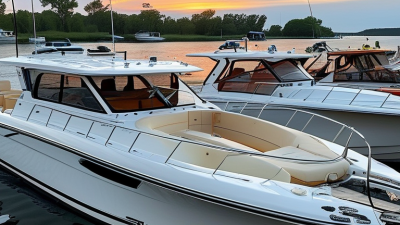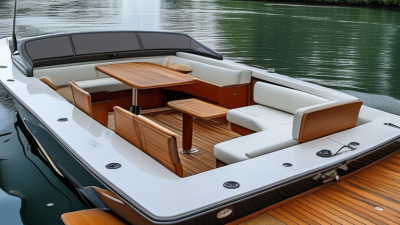
So, why go with Marine Foam Sheets when building a boat? Well, starting with the right materials is key if you want something reliable that can handle water, stay lightweight, and stand the test of time. These foam sheets are pretty much the go-to core material for hulls, decks, bulkheads, and even the insides of a boat. What’s cool is their closed-cell design, which means they resist water absorption—big plus, right? Plus, they’re lightweight, so designers can keep overall weight in check. And honestly, you’ll notice the difference when it comes to installing them—they’re much easier to carry, cut, shape, and fit into tight spots inside the hull.
Of course, it’s not just about the foam itself. Things like resin compatibility, how thick the laminate is, surface prep, and even heat exposure all matter a lot. Top manufacturers like Gurit supply technical data to help guide your choices, but remember—nothing beats doing some testing yourself. A tiny sample can show you if the adhesive properly wets the surface or if there are dry, weak spots.
Gougeon Brothers’ co-founder, Meade Gougeon, once said, “A well-built boat starts with understanding materials, not just throwing them together.” It’s such a simple but powerful idea—when it comes to Marine Foam Sheets, the best choice really depends on your boat’s size, what it’s going to be used for, the loads it’ll carry, and how you plan to build it. You want to look at things like compressive strength, shear performance, density, fire safety, and how you’ll finish the surface. Foam can definitely make the building process easier, but it’s no fix for poor engineering or design.
Now, not all options are perfect. For instance, a lightweight panel might need stronger skins, or a cheaper grade of foam might end up costing you more in labor later on. But if you pick the right foam and install it carefully, it can really help you build a boat that’s both efficient and durable without adding unnecessary weight. It’s all about making smart choices and paying attention to detail.
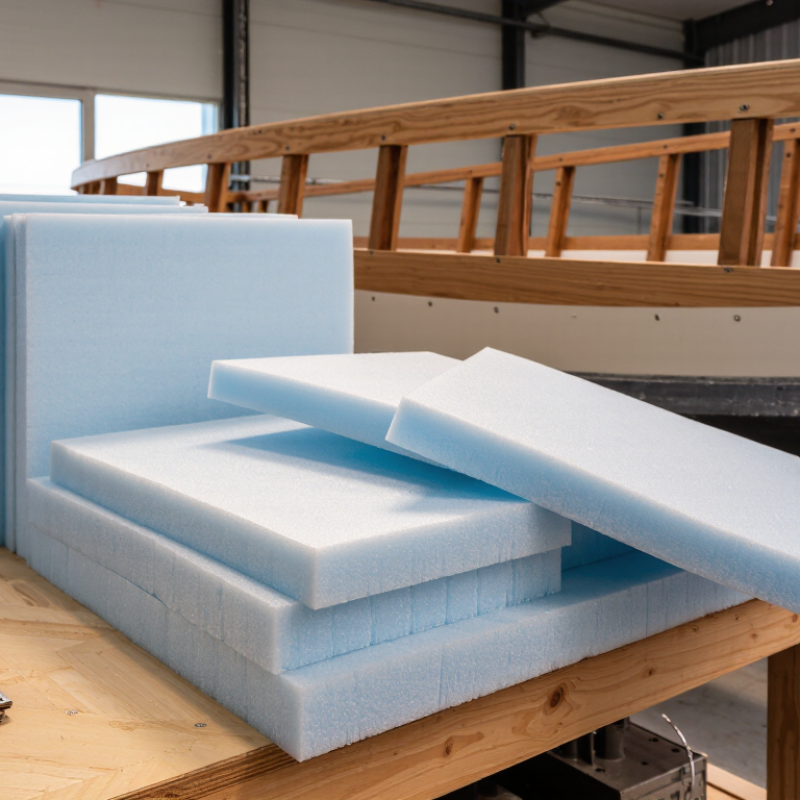
Marine foam sheets are lightweight, resilient panels used for boat decking, seating, trim, and interior protection. Most are made from closed-cell ethylene-vinyl acetate, commonly called EVA foam. Unlike open-cell foam, closed cells resist water entry and help reduce surface dampness. Marine Eva Foam Sheets also provide cushioning under bare feet and improve traction on wet decks.
Their performance depends on density, thickness, texture, and adhesive compatibility. Typical marine EVA sheets range from about 30 to 120 kg/m³ in density, although specifications vary by manufacturer. A 2024 Grand View Research report estimates the global EVA foam market will grow at roughly 5% annually through 2030. That figure reflects wider demand, not boatbuilding alone. Still, it shows growing use across demanding applications. ISO 1183 density testing and ASTM water-absorption methods offer useful comparison points. In practice, laboratory values cannot replace a deck trial.
Tips: Check the foam’s closed-cell structure, thickness tolerance, UV resistance, and cleaning response. Test a small bonded area first. Poor surface preparation remains a common failure. Remove wax, dust, and old sealant before installation. Use a marine-rated adhesive recommended for the substrate, then allow proper curing time. A darker sheet may become noticeably hotter in direct sun, which deserves consideration. I would not choose foam by appearance alone; texture, compression recovery, and long-term exposure matter more.
Marine foam sheets are built around a cellular structure, not a solid block. In Eva Marine Foam Sheets, thousands of small, closed cells form a lightweight polymer matrix. Each cell traps gas inside thin flexible walls. This structure helps resist water absorption, cushioning, and repeated foot traffic. It also explains why the sheet can feel soft while remaining dimensionally stable.
Cell size and density matter. Smaller cells usually create a more uniform surface and better compression recovery. Higher density can improve durability, but it may increase weight. ASTM D3575 provides test methods for flexible cellular olefin materials, including density, tensile strength, and water-related performance. The 2024 NMMA Recreational Boating Statistical Abstract recorded 11.6 million registered recreational vessels in the United States in 2023. That scale makes consistent foam quality important for decks, seating, and cabin panels. Still, field conditions can expose weaknesses that laboratory tests miss.
Tips: Check density, thickness, cell uniformity, and surface bonding before installation. Press a cut edge gently. Uneven pores may signal inconsistent expansion. Keep adhesive compatibility in mind. ASTM results are useful, but they do not replace a trial panel. In my experience, poor substrate preparation causes more failures than the foam itself. I may be wrong in some applications; heat, salt spray, and sharp hardware can change performance quickly.
Marine foam sheets support lighter, stiffer hulls without adding unnecessary bulk. Their sandwich structure places strong skins around a lightweight core. This improves bending performance and reduces panel deflection. The JEC Observer 2023 reported approximately 12.7 million tonnes of composites produced globally in 2022. Marine construction remains a demanding application within that wider market. Closed-cell PVC and PET foams resist water uptake better than many open-cell materials. However, they are not magically waterproof. Cut edges, fastener holes, and damaged skins still require careful sealing.
Foam density controls performance. Higher-density grades usually provide greater compressive and shear strength, but they add weight and cost. Lower-density sheets can suit cabin panels or deck areas with lighter loading. Published testing under ASTM C365/C365M commonly compares compressive strength by density, not by appearance. That distinction matters. A smooth sheet can still fail under concentrated loads. In practical boatbuilding, installers should check resin compatibility, bonding temperature, peel strength, and long-term fatigue data. I have found that poor surface preparation often causes more trouble than the foam itself. That assumption deserves review.
When comparing boat materials, weight is often the first practical difference. Closed-cell foam sheets can reduce hull weight without absorbing much water. Plywood and solid timber provide useful stiffness, but they need careful sealing around every cut edge. Fiberglass offers strong skins and good impact resistance, although it can add labor, resin, and curing time. Aluminum is durable and repairable, yet it may transmit engine noise and heat more readily.
The core material does not work alone. Foam usually needs fiberglass or another rigid skin to carry structural loads. That detail matters. In contrast, a plywood panel can sometimes support loads directly, while a foam core depends on proper bonding and lamination. Eva Foam Sheets Marine products are more commonly selected for padding, flooring, and non-slip surfaces than for primary hull structure. Their comfort and water resistance are useful, but they should not be treated as a substitute for engineered structural foam.
Installation quality decides much of the result. Builders should check density, compression strength, adhesive compatibility, and resistance to fuel, sunlight, and repeated impact. A poorly bonded foam panel may flex, trap moisture, or fail earlier than expected. Foam also complicates local repairs when hardware needs strong backing. Traditional materials remain valuable in these areas. The honest choice depends on the boat’s size, operating water, budget, and repair skills. I would not select foam simply because it is light. That shortcut can become expensive.
Marine foam sheets are used across many working areas of a boat, not only on the deck. Marine Foam Decking Sheets provide a softer surface for cockpits, swim platforms, steps, and fishing areas. They help reduce foot fatigue and improve grip when water covers the floor. Closed-cell foam also resists water absorption, but proper bonding still matters. A loose edge can collect sand, oil, and moisture.
Inside the hull, foam sheets may serve as lightweight core material for floors, seats, side panels, and selected bulkheads. They can reduce weight while adding comfort and limited insulation. Their suitability depends on density, thickness, compression strength, and fire performance. Boat builders should check technical data before cutting panels. Not every foam sheet belongs below the waterline. That mistake can become expensive.
Tips: Measure curved surfaces with a paper template before cutting. Clean the substrate thoroughly, then allow it to dry completely. Use compatible marine adhesive and apply even pressure during curing. Leave neat drainage paths around fittings and access covers. Small details matter. I would still test a sample in heat, sunlight, and repeated foot traffic before covering a large deck. Foam can look perfect on day one, yet poorly prepared surfaces may cause early lifting.
| Boat Area or Application | Common Foam Sheet Type | Main Function | Typical Performance Requirements | Representative Thickness Range | Why Foam Sheets Are Suitable |
|---|---|---|---|---|---|
| Hull and Deck Core | Closed-cell PVC, PET, or SAN structural foam | Creates a lightweight sandwich panel with fiberglass or carbon-fiber skins. | Low water absorption, adequate compressive strength, dimensional stability, and compatibility with resin systems. | 10–50 mm, depending on panel design and vessel size | Increases panel stiffness without adding the weight of a solid laminate or metal plate. |
| Cabin Roofs and Hardtops | Lightweight closed-cell structural foam | Provides a rigid, lightweight core beneath laminated outer skins. | Good bending stiffness, low density, heat resistance, and reliable bonding. | 10–30 mm | Helps reduce weight above the boat’s center of gravity, which can support better stability and handling. |
| Cockpit Sole and Flooring | High-density PVC or PET structural foam | Supports deck loads and distributes localized pressure from passengers, furniture, and equipment. | High compressive strength, resistance to fatigue, low moisture uptake, and good impact tolerance. | 15–40 mm | Provides a stiff walking surface while reducing the amount of resin and laminate required. |
| Transom Reinforcement | High-density structural foam or reinforced composite core | Transfers loads from outboard motors, steering systems, lifting eyes, and other hardware. | High compression and shear strength, strong fastener-load capability, and resistance to water exposure. | 20–60 mm, often combined with local reinforcement | Offers a lighter alternative to solid timber or thick solid laminate when properly engineered. |
| Bulkheads and Interior Partitions | PVC, PET, or low-density closed-cell foam | Forms lightweight partitions and contributes to local hull stiffness. | Low weight, dimensional stability, bondability, and sufficient shear strength. | 5–25 mm | Reduces interior structural weight and can help limit vibration transmission. |
| Engine Covers and Access Panels | Closed-cell foam with fiberglass or composite skins | Creates removable panels with moderate stiffness and thermal or acoustic separation. | Low water absorption, resistance to vibration, moderate temperature resistance, and easy fabrication. | 10–25 mm | Produces panels that are easier to lift and handle than solid composite or plywood alternatives. |
| Seating Bases and Cushions | Flexible polyurethane, polyethylene, or EVA foam | Provides cushioning, comfort, and support for seats, benches, and backrests. | Appropriate firmness, compression recovery, UV protection, and resistance to mildew or moisture. | 20–100 mm, based on comfort and support needs | Can be cut to shape and combined with marine upholstery for lightweight, comfortable seating. |
| Rub Rails and Protective Padding | Closed-cell polyethylene or EVA foam | Absorbs minor impacts and protects hull edges, gunwales, and equipment. | Impact resilience, abrasion resistance, flexibility, and resistance to water and sunlight. | 10–50 mm | Provides cushioning without readily absorbing water like many open-cell materials. |
| Buoyancy Compartments | Closed-cell polyethylene, EVA, or buoyancy-rated foam | Provides reserve buoyancy within designated flotation spaces. | Very low water absorption, stable buoyancy, durable cell structure, and compliance with applicable marine regulations. | Designed according to required buoyancy volume | Closed-cell construction helps maintain buoyancy when the material is exposed to water, although the complete system still requires proper design. |
| Insulation Around Refrigeration or HVAC Areas | Closed-cell polyethylene, elastomeric, or polyisocyanurate foam | Reduces heat transfer and helps control condensation. | Low thermal conductivity, moisture resistance, temperature tolerance, and stable thickness. | 10–50 mm | Improves thermal efficiency in coolers, refrigeration spaces, and selected cabin areas without significant added weight. |
| Sound and Vibration Control | Polyurethane, polyethylene, or elastomeric acoustic foam | Reduces airborne noise and limits vibration transfer in selected interior areas. | Suitable acoustic absorption, resilience, moisture resistance, and appropriate fire performance for the installation. | 10–50 mm | Helps improve onboard comfort while adding less mass than many traditional acoustic treatments. |
| Equipment Mounting Pads | High-density elastomeric or closed-cell polyethylene foam | Separates equipment from the supporting structure and distributes contact loads. | Compression set resistance, vibration damping, chemical resistance, and stable support under repeated loading. | 5–25 mm | Can reduce rattling, surface damage, and localized stress when selected for the equipment load. |
Note: Thicknesses and material choices are representative ranges only. Final selection should be based on vessel size, loading, laminate schedule, bonding method, fire requirements, flotation regulations, and the foam manufacturer’s technical data.
Marine foam sheets support lighter, stiffer, and more impact-resistant boat structures. However, selection should begin with the panel’s real function. A structural core needs adequate compressive, tensile, and shear strength. A flotation insert needs low water absorption and reliable buoyancy. Closed-cell foam is often preferred because it limits water uptake, but it is not automatically suitable for every resin system.
The U.S. Coast Guard’s 2023 Recreational Boating Statistics recorded 4,064 boating accidents, 556 deaths, and 2,641 injuries. These figures do not prove that foam prevents accidents. They do show why hull integrity and flotation deserve careful engineering. Check the manufacturer’s technical data, including density, shear strength, service temperature, and resin compatibility. Also review relevant ABYC and ISO requirements. A small mismatch can cause poor bonding or hidden delamination.
Installation should start with a clean, dry, accurately shaped surface. Dry-fit every sheet first. Stagger joints, bevel sharp edges, and leave no unfilled gaps. Apply only the approved adhesive or resin system. Press the panel evenly, then inspect for trapped air. Do not trust a datasheet alone; real temperatures and curved hulls can change the result.
Tips: Wear suitable protective equipment. Keep foam away from open flame. Mark each panel before cutting. Seal exposed edges where water could enter. Check the finished laminate with careful visual and tap testing. My practical caution is simple: rushing the first fitting often creates expensive repairs later.
Closed-cell foam sheets are lightweight, buoyant, easy to shape, and less prone to water uptake than open-cell foam. The chart compares representative 24-hour water-absorption values by volume for common foam-core categories tested under standardized laboratory methods. Lower values generally indicate better resistance to moisture penetration.
When selecting marine foam sheets, match the foam density and compressive strength to the expected loads, then confirm compatibility with the chosen resin or adhesive. During installation, cut accurately, keep the core clean and dry, bond it evenly without voids, and seal exposed edges and penetrations to limit water pathways. Actual performance varies by density, formulation, thickness, facing, and test conditions.
Marine flooring market insights from leading research reports point to growing demand for safer, more durable, and visually coordinated surfaces in boats and yachts. As vessel owners, manufacturers, and refurbishment companies place greater emphasis on onboard comfort and operational safety, custom EVA anti-slip pads are becoming a practical solution for helm stations and steering consoles. Their closed-cell marine-grade construction resists water absorption, UV exposure, stains, and odors, while the standard 6 mm thickness provides cushioning, shock absorption, and comfortable support during long periods of navigation.
Designed for wet and demanding environments, these EVA pads are available with vertical brushed grain, diamond, or honeycomb textures to improve traction for captains and crew. Custom thicknesses can accommodate different vessel structures, while 1:1 measurement and precision CNC cutting create accurate fits around control panels, seats, dashboards, and footrests. Black, light brown, and more than 20 marine color options support solid or two-tone designs, with edge binding available for a refined finish. This combination of safety, comfort, customization, and efficient installation makes the mats suitable for boat builders, yacht construction projects, marine renovation providers, and marine accessory distributors seeking reliable flooring solutions from a specialized manufacturing supplier.
They are used for boat decking, seating, trim, hull panels, and interior protection. Closed-cell foam cushions bare feet and improves traction on wet surfaces. It also reduces surface dampness. Not completely waterproof.
Its sealed cells resist water entry better than open-cell foam. This helps limit moisture absorption during normal use. However, cut edges and drilled holes still need sealing. Small details matter.
Higher density usually improves compressive and shear strength. It also increases weight and cost. Lower-density sheets may suit cabin panels and lightly loaded areas. Appearance cannot show strength.
Thickness depends on loading, support spacing, comfort, and panel design. Deck padding may need different thickness from a hull core. A thicker sheet is not always better. Test the actual application.
Remove wax, dust, grease, and old sealant first. Keep the surface dry and reasonably smooth. Use adhesive compatible with the foam and substrate. Bond a small sample before full installation.
Reinforce mast steps, seat mounts, winch bases, and other concentrated-load points. Local inserts can spread pressure through the panel. A smooth surface can still fail. Concentrated loads deserve attention.
UV resistance should be checked before outdoor installation. Darker sheets may become noticeably hotter in direct sunlight. Consider color, exposure, and ventilation together. I would not choose by appearance alone.
Store sheets flat, dry, and away from unnecessary heat. Avoid forcing warped material into position during installation. Check moisture before bonding. My earlier assumption was simple: storage quality matters more than expected.
Marine Foam Sheets are lightweight, durable materials designed to support modern boat building and renovation. Their closed-cell or specially reinforced structures help resist water absorption while providing buoyancy, insulation, and impact protection. These qualities make them suitable for hull cores, decks, seating foundations, interior panels, flotation compartments, and other areas where low weight and reliable performance are important. Compared with traditional materials such as solid wood or heavier composites, foam sheets can reduce overall vessel weight, simplify shaping, and improve energy efficiency without sacrificing structural support when properly integrated.
Choosing the right sheet requires consideration of density, thickness, flexibility, strength, moisture resistance, and compatibility with adhesives or covering materials. Installation generally involves accurate measuring, clean cutting, careful surface preparation, and secure bonding or mechanical fastening according to the boat’s design. Properly sealed joints and protected surfaces can extend service life and help maintain comfort, safety, and performance in demanding marine environments.