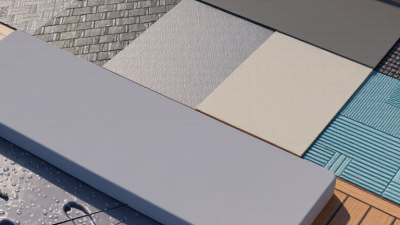
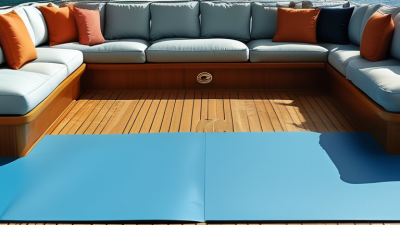
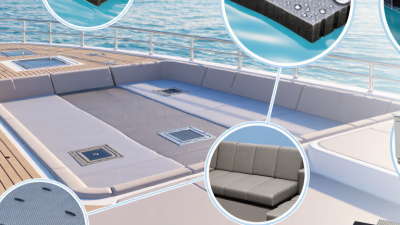
Picking the right Eva boat flooring supplier in China isn't just about the price tag, honestly. You need someone who really gets boats—the layout, how the deck moves, what saltwater does over time, and how many people are walking on it every day. That kind of experience is key, you know?
You know, Dr. George Wypych, who studies marine materials, once said something that really sticks with me: “Material performance depends on formulation, processing, and service conditions.” And honestly, that couldn't be more true when you're talking about boat EVA flooring. Here's the thing—EVA quality? It's all over the map between suppliers. I mean, some are great, some are... not so much. The real deal-breakers usually come down to stuff like density, how soft it feels, whether the color fades after a few seasons, how well the adhesive holds up, and even the surface texture. All of that combined is what actually determines how it performs out on the water. You know, a soft deck might feel nice under your feet, but honestly, it can give out way too fast once you start piling fishing gear on it. On the flip side, a denser sheet is tough and lasts longer, but it's not exactly forgiving when you're walking around barefoot. So it's a bit of a trade-off, really. Now, take a closer look—you'll see what I mean.
Let's talk about Chinese manufacturers—but not just from glossy brochures. This guide digs into the real stuff: what actually happens on the factory floor, how consistent their materials are, whether their CNC cutting is precise, how good their bonding advice is, how they handle samples, and what their after-sales communication is like. Take suppliers like AquaDeck China or MarineStep EVA—you shouldn't judge them by how pretty their catalogs are. Instead, look at documented processes. And when it comes to product samples, don't be gentle. Bend them, wet them, walk on them, and clean them repeatedly to see how the edges hold up.
Because it's the little details that tell you the real story.
Honestly, a supplier you can count on should be crystal clear about their foam specs right from the get-go. And they've got to be upfront about adhesive limits and the conditions needed for installation, too. I mean, certifications are nice—they do give you some peace of mind—but they're not a substitute for testing things yourself. Nobody's perfect, right? Even a factory with years of experience can run into issues like color mismatches, damage during shipping, or fitting goofs. That's just part of the game, and it's something worth talking about openly.
So, when you're hunting for a top-notch EVA boat flooring supplier in China, you're really looking for someone who's got your back—not just with solid engineering but with real support that doesn't disappear once you sign the deal. The best ones actually listen to what boat builders like you are saying, tweak their templates to fit your needs, and take your feedback seriously. It's not just about selling you something; it's about building a relationship. Now, this article is here to help you compare your options with a keen eye, so you don't end up with something you'll regret later. At the end of the day, it's all about finding that sweet spot between comfort, durability, customization, price, and the peace of mind that they'll still be around when you need them. That long-term reliability? It's a game-changer.
What Is EVA Boat Flooring and Why Is It Used in Marine Decking?
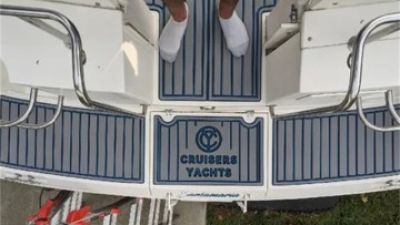
Eva Boat Flooring is a closed-cell foam decking material made mainly from ethylene-vinyl acetate. Its sealed structure resists water absorption and helps keep the deck lighter. Marine users install it on fishing boats, pontoons, swim platforms, and yacht cockpits. The surface feels softer than bare fiberglass or aluminum under wet feet. It also reduces glare and noise when gear moves across the deck. A textured top layer can improve grip, especially around boarding areas and fish boxes. Comfort matters during long hours on the water.
In practical deck inspections, the best results come from careful preparation. The surface must be clean, dry, smooth, and free from wax or oil. Accurate templates help prevent crooked seams around hatches and rails. A rushed cut looks small at first. Later, it can collect dirt and lift at the edge. EVA foam is durable, but it is not flawless. Sharp hooks, dragging anchors, and strong solvents may damage its surface. Regular rinsing removes salt, sand, and fish residue before they become stubborn stains. Some owners expect the foam to last forever, which is unrealistic. Sunlight, heat, and heavy use gradually change its color and texture. Choosing the correct thickness, adhesive, and surface pattern requires attention to the boat’s layout and daily workload.♀♀
Key EVA Specifications: 30–50 kg/m³ Density and 5–6 mm Thickness
China Best EVA Boat Flooring Supplier?
For marine flooring, density and thickness deserve more attention than surface color. A 30–50 kg/m³ EVA sheet balances cushioning, weight, and dimensional stability. Lower-density foam feels softer under bare feet. Higher-density foam usually resists compression better. However, density alone cannot prove long-term deck performance.
ISO 845 specifies apparent-density testing for cellular plastics. Under this method, 30–50 kg/m³ equals approximately 0.03–0.05 g/cm³. The target thickness is 5–6 mm, which can provide noticeable foot comfort without creating excessive height around hatches. ASTM D3575 also supports testing for flexible cellular materials, including compression and physical properties. These figures should appear in a documented test report, not only on a product sheet.
Small details matter.
In dockside inspections, uneven adhesive spread can create soft spots beneath a correctly rated foam panel. Surface texture also changes wet traction after salt, sunscreen, and rain exposure. A 2024 marine flooring market review identifies lightweight, water-resistant foam systems as growing application categories, but it does not replace project testing. The specification is useful, not universal. Some high-traffic decks may need stronger compression recovery or thicker backing. Others may benefit from 5 mm foam to reduce edge lifting. Suppliers should provide batch density, thickness tolerance, water absorption, UV-aging, and peel-strength data. One weakness remains: laboratory results may not predict every boat’s heat, movement, and cleaning conditions.
Marine Safety Standards: ASTM D2047 Slip Resistance and ISO 105-A02
China Best EVA Boat Flooring Supplier?
Choosing Boat Eva Foam Flooring requires more than soft feel and attractive decking patterns. The 2023 U.S. Coast Guard Recreational Boating Statistics recorded 3,844 boating accidents, 564 deaths, and 2,126 injuries. Wet decks can increase movement risks, especially near swim platforms, ladders, and cockpit edges. Therefore, suppliers should provide test records, material details, and installation guidance.
ASTM D2047 measures the static coefficient of friction for polish-coated floor surfaces. It is useful for comparison, but it was not created specifically for wet marine decks. A laboratory pass is not a promise under saltwater, sunscreen, mud, or heavy rain. This distinction matters. ISO 105-A02 evaluates colour change with a grey scale from Grade 1 to Grade 5. It measures colour fastness, not slip resistance. Stronger colour retention can support visual contrast, yet it cannot replace traction testing.
Tips: Request the original ASTM D2047 test conditions, including surface moisture and footwear details. Ask for ISO 105-A02 colour-change results after realistic UV and salt exposure. Check whether the foam remains bonded after repeated cleaning. Small gaps may trap sand and water. Inspectors should record deck temperature, contamination, drainage, and wear during trials. I have seen attractive samples perform poorly after installation; early testing is cheaper than replacing a complete deck.
How Chinese Suppliers Manufacture UV-Resistant EVA Boat Flooring
Chinese EVA boat flooring suppliers usually begin with closed-cell EVA foam, not finished decking. The foam is blended with UV stabilizers, pigments, and adhesives in controlled batches. A 2024 Grand View Research report places the global EVA foam market on a growth path exceeding 5% annually through 2030. Marine flooring benefits from that wider material development.
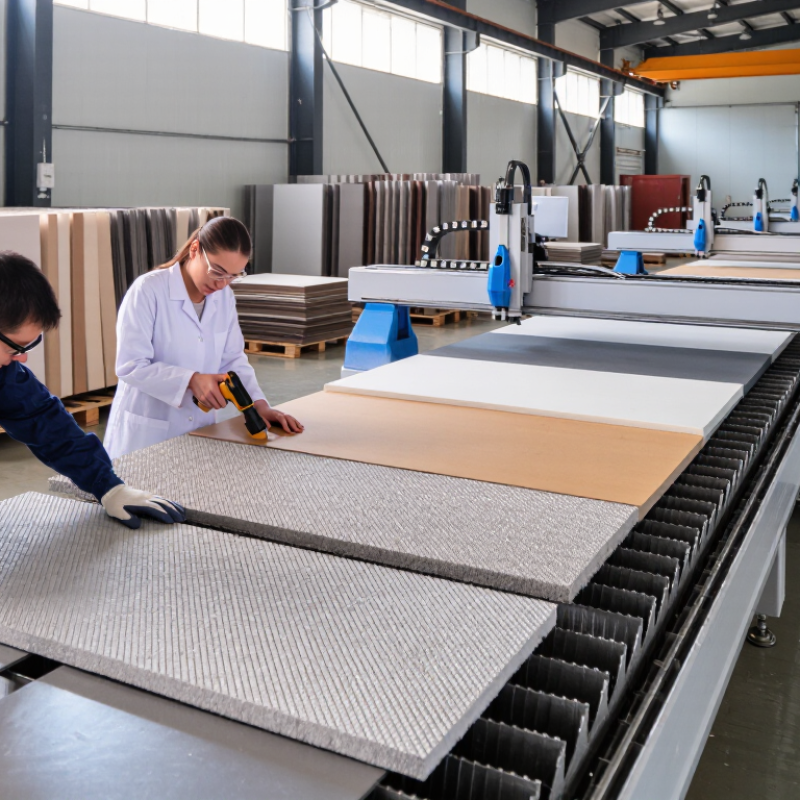
Manufacturing starts with calibrated foaming. Temperature and pressure affect cell size, softness, and water absorption. After cooling, CNC machines cut teak lines, logos, drainage grooves, and tight corner shapes. For Eva Teak Boat Flooring, suppliers often laminate a darker wear layer over a lighter base. This creates realistic grain contrast. It also makes scratches less obvious.
UV resistance requires more than color selection. Suppliers add stabilizers, then test samples under fluorescent UV-A exposure. ASTM G154 commonly uses 340 nm lamps for accelerated weathering. ISO 4892-3 also defines fluorescent UV testing methods. Technicians inspect fading, cracking, shrinkage, and adhesive lift after exposure cycles. Independent marine testing reports often treat color change as a key durability indicator. However, accelerated testing is not the sea. Salt spray, wet feet, sunscreen, and heat create messier conditions. Factory data can look perfect. Installation may still fail through poor surface preparation. I would request batch records, peel-strength results, and exposed sample photos before ordering. Some suppliers need stronger edge sealing; this is an honest weakness, not a minor detail.
Custom EVA Anti-Slip Yacht Mats: Durable Marine-Grade Solutions from China Suppliers and Factories
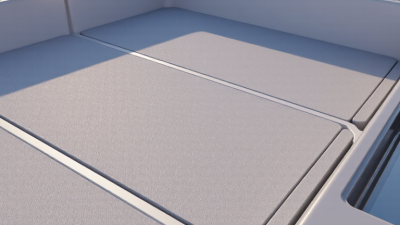
Custom EVA anti-slip yacht mats provide a practical and stylish upgrade for yacht decks, swim platforms, and cockpits. Produced by experienced suppliers and factories in China, these marine-grade mats are made from high-density, closed-cell EVA that is lightweight, odorless, and environmentally friendly. Their resistance to saltwater, UV exposure, and high temperatures helps maintain reliable performance during extended use in demanding marine environments. A standard 6mm thickness offers a balanced combination of cushioning, durability, and underfoot comfort.
Designed for both renovation projects and replacement applications, the mats are available in vertical stripe, diamond, and honeycomb textures to meet different traction and design preferences. Customers can select black, light brown, or more than 20 custom marine colors, with options for solid panels, two-tone layouts, and neat edge binding. These choices make it easier to coordinate the flooring with a yacht’s interior and exterior styling.
Using 1:1 boat scanning and precision CNC cutting, Chinese manufacturers can create accurately fitted mats for various yacht models. Pre-cut drainage and fixing holes simplify installation while helping water flow away from walking areas. The combination of marine-grade materials, customized patterns, and precise fabrication makes these EVA mats suitable for owners, repair specialists, and yacht renovation professionals seeking dependable deck protection and improved grip.
Conclusion
Eva Boat Flooring is a lightweight, resilient decking material designed to improve comfort, traction, and protection on marine surfaces. Its closed-cell structure helps resist water absorption, while the soft, non-slip texture provides a more secure walking area for boats and other marine applications. A practical specification range is 30–50 kg/m³ density with a thickness of approximately 5–6 mm, offering a balance between cushioning, durability, and manageable weight. Slip performance can be assessed through ASTM D2047 testing, while ISO 105-A02 may be used to evaluate color changes after weathering or exposure.
When selecting a Chinese supplier, buyers should examine how the flooring is produced and tested for UV resistance, dimensional stability, bonding strength, and surface durability. Suppliers may offer custom CNC-cut patterns, adhesive-backed panels, or standard sheets for different installation needs. The most reliable evaluation should be based on clear test data, consistent production quality, accurate cutting, suitable adhesive performance, and documented inspection procedures rather than price alone.
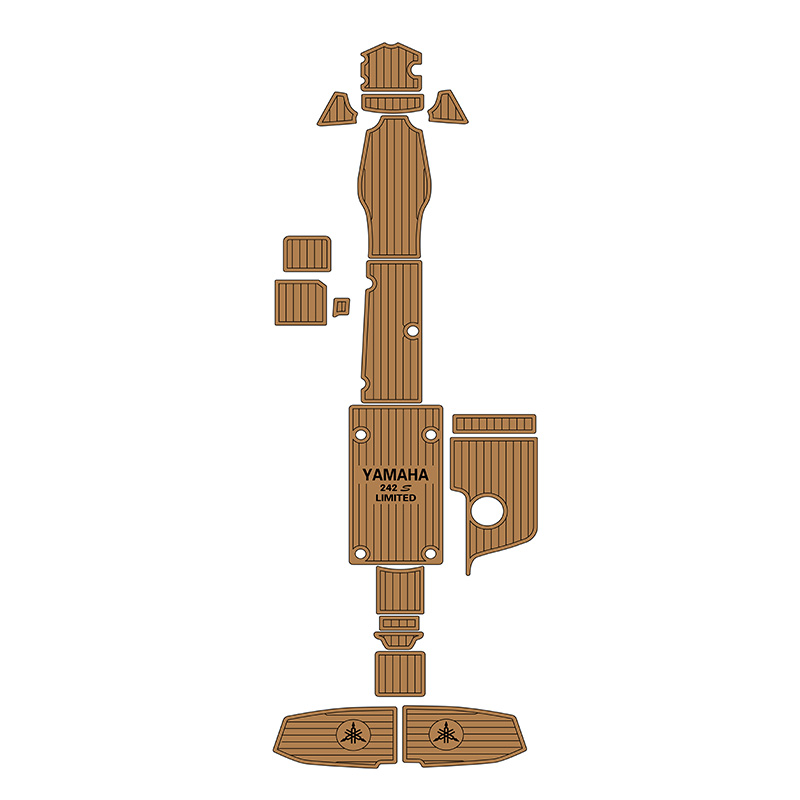 Marine Decking & Custom Kits
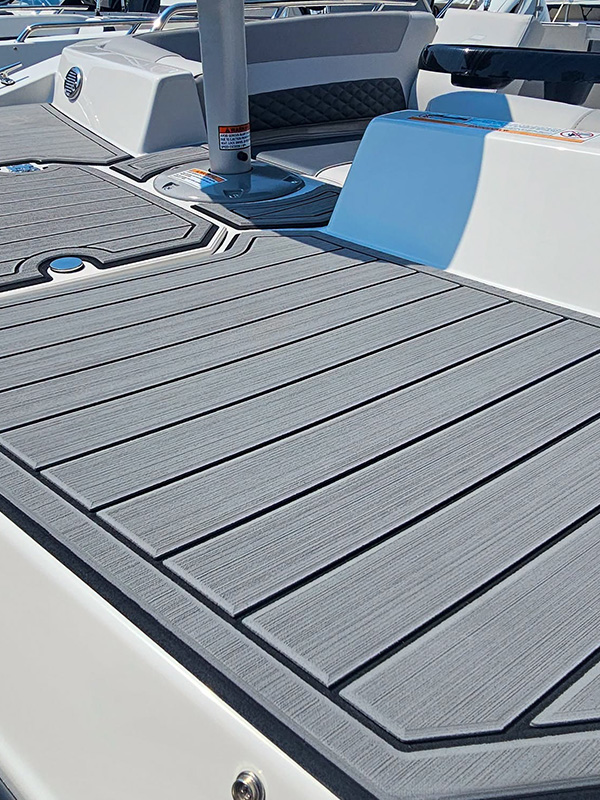 Yacht Decking
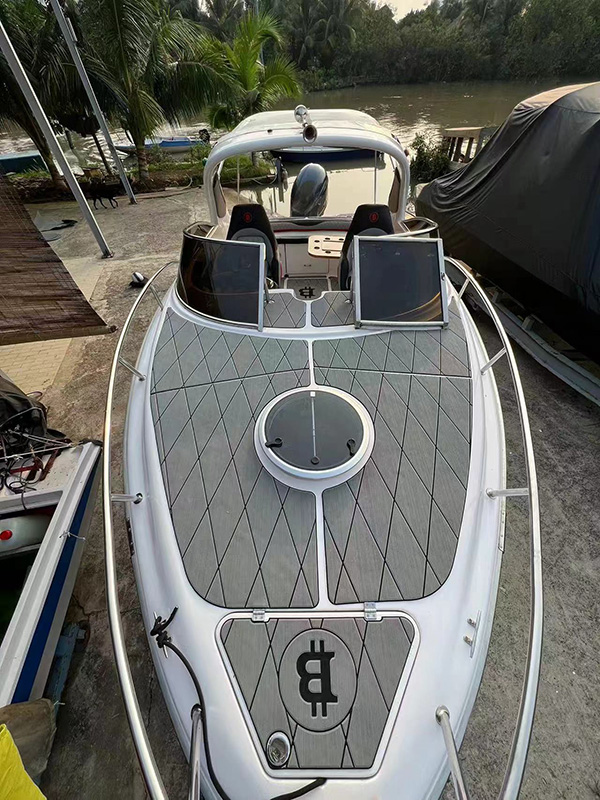 Fishing Boat Decking
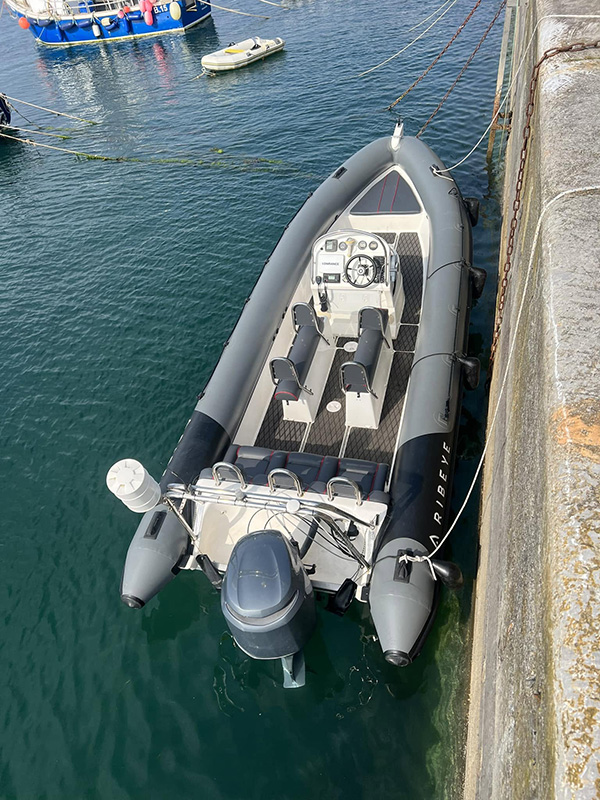 RIB Decking
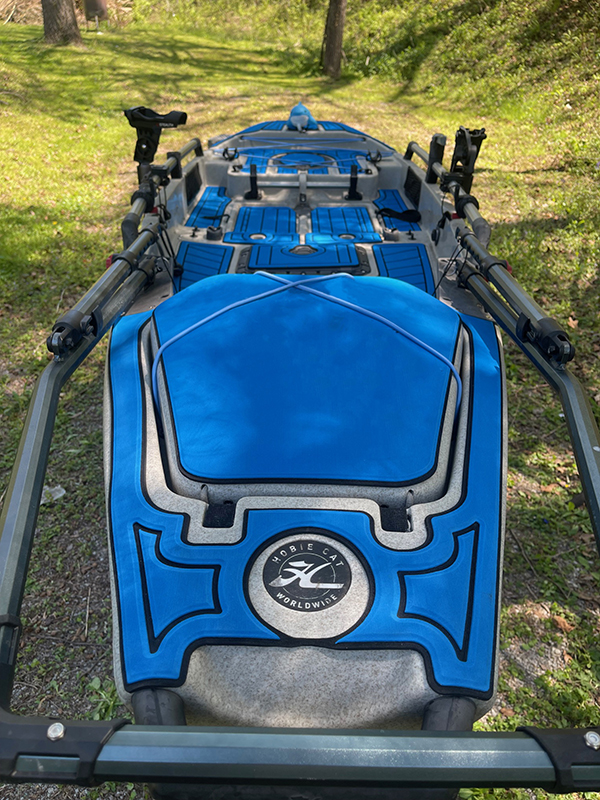 Kayak Deck Pads
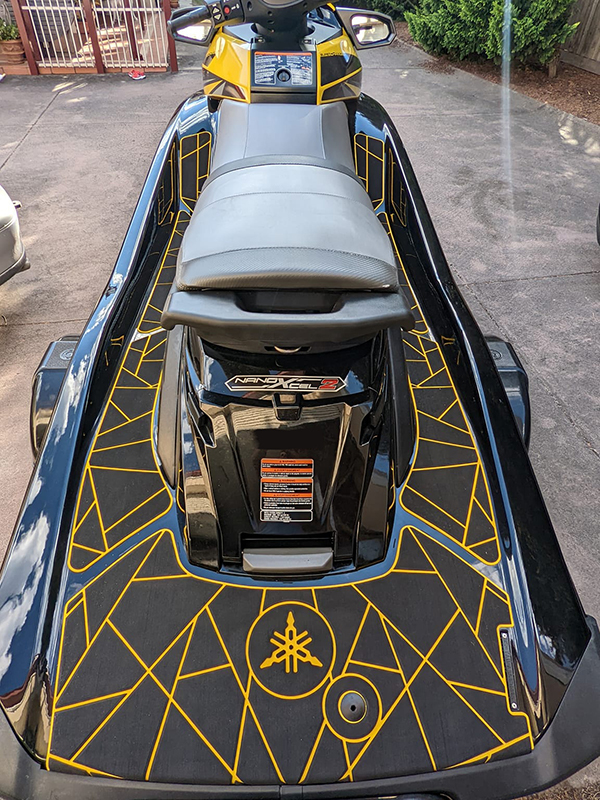 Jet Ski Traction Mats
 Onboard Comfort & Utility Pads
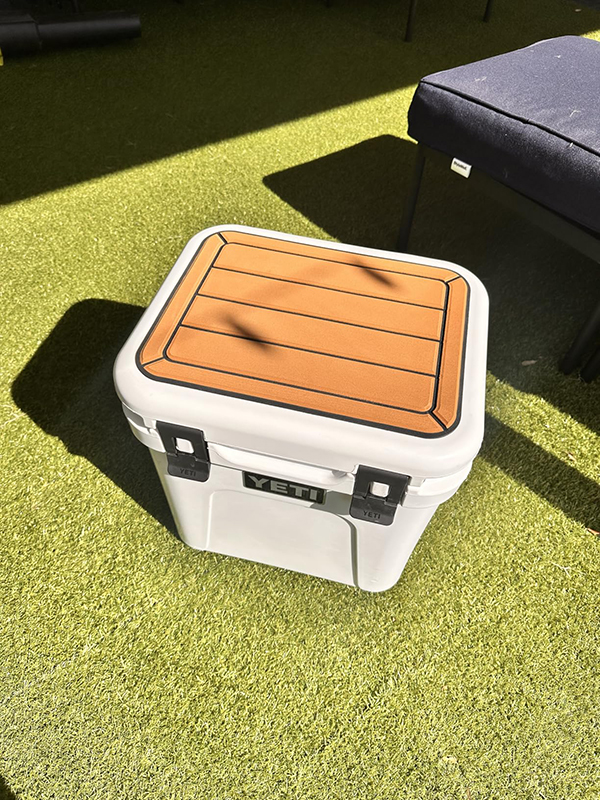 Cooler Pads
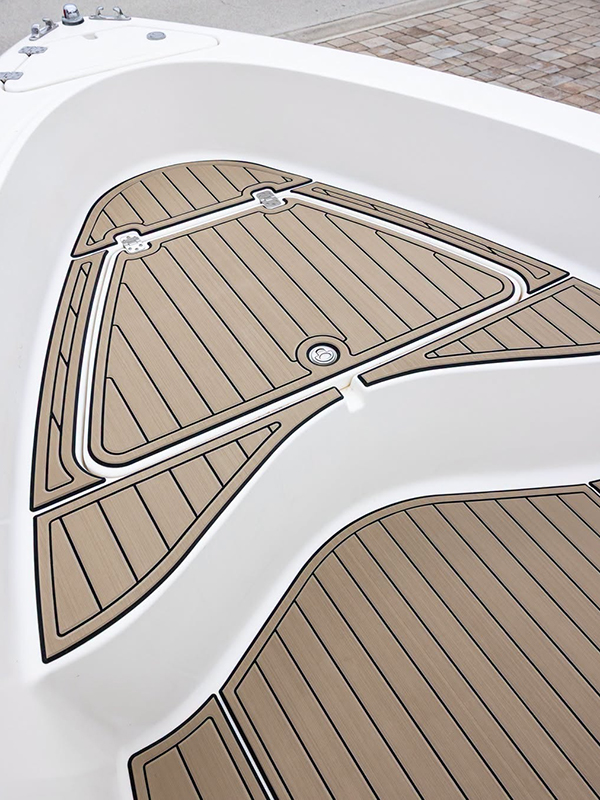 Coaming Bolster Pad
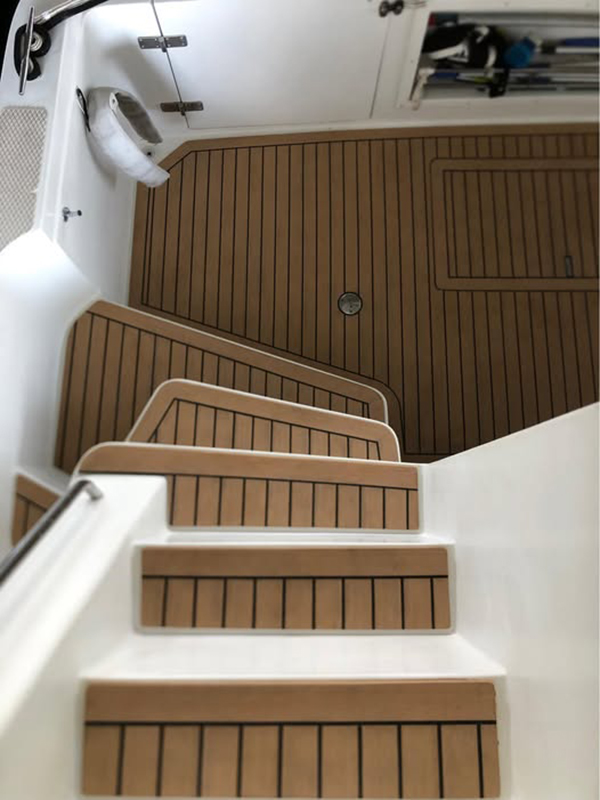 Step Pads
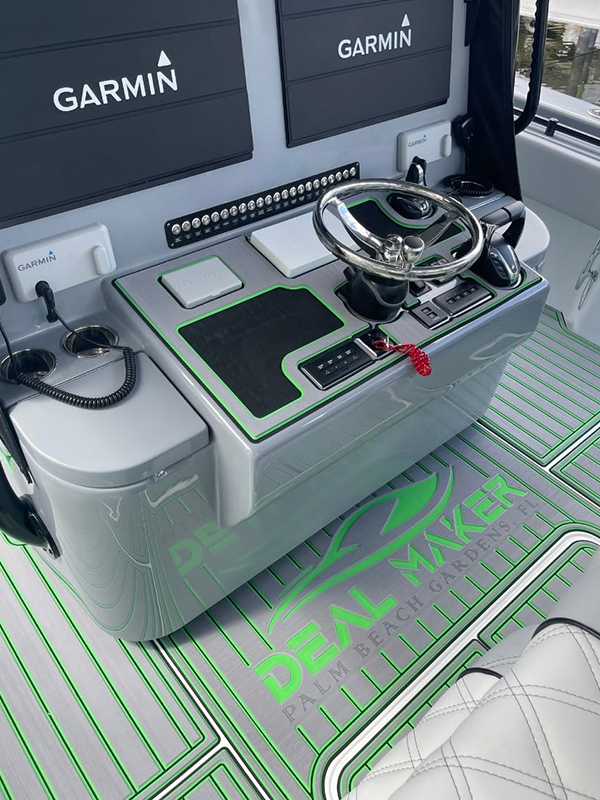 Helm Station Pads
 Watersports & Fishing Gear
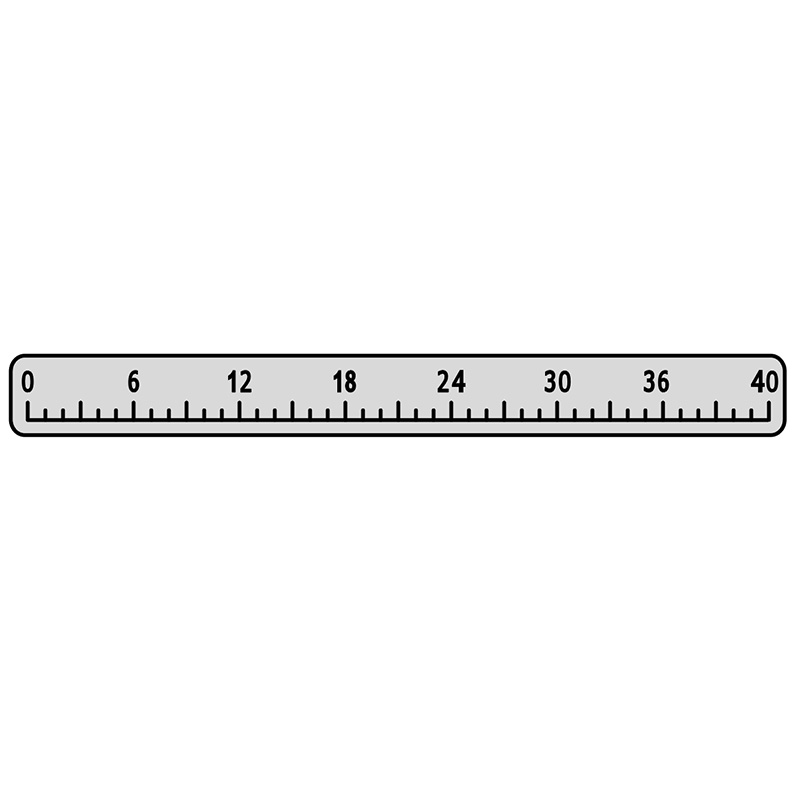
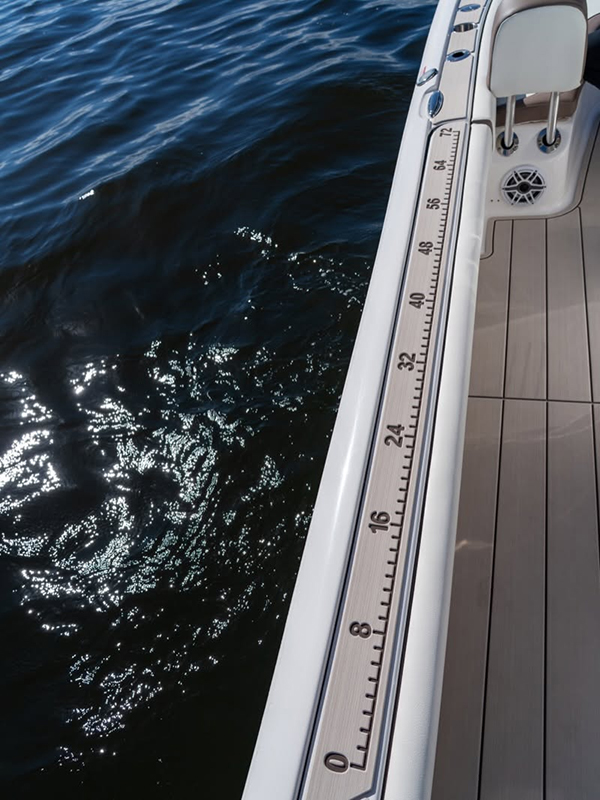 Fish Rulers
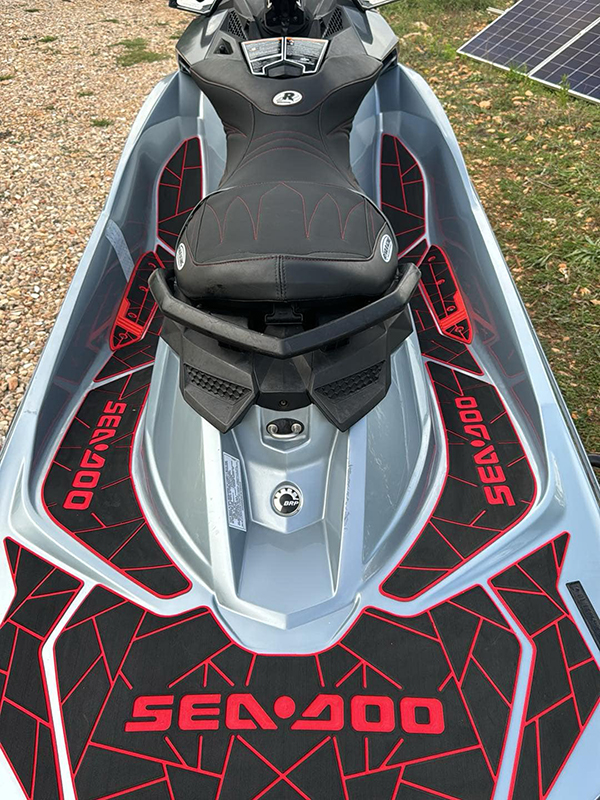 PWC Traction Pads
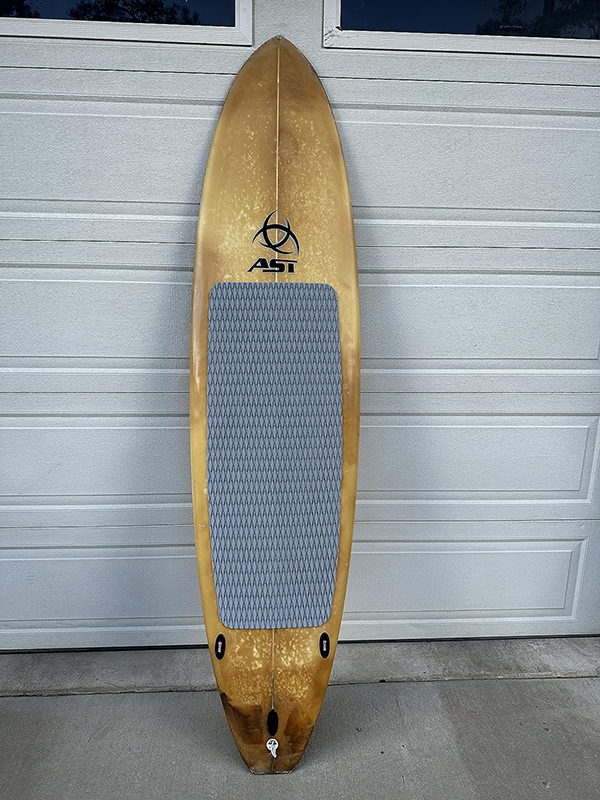 Stand-Up Paddleboard (SUP) Pads
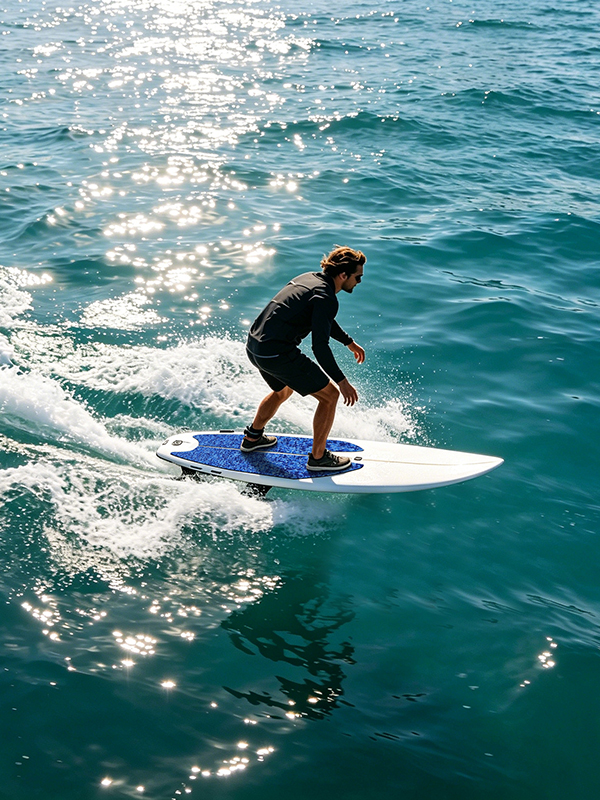 Hydrofoil Surfboard Pads
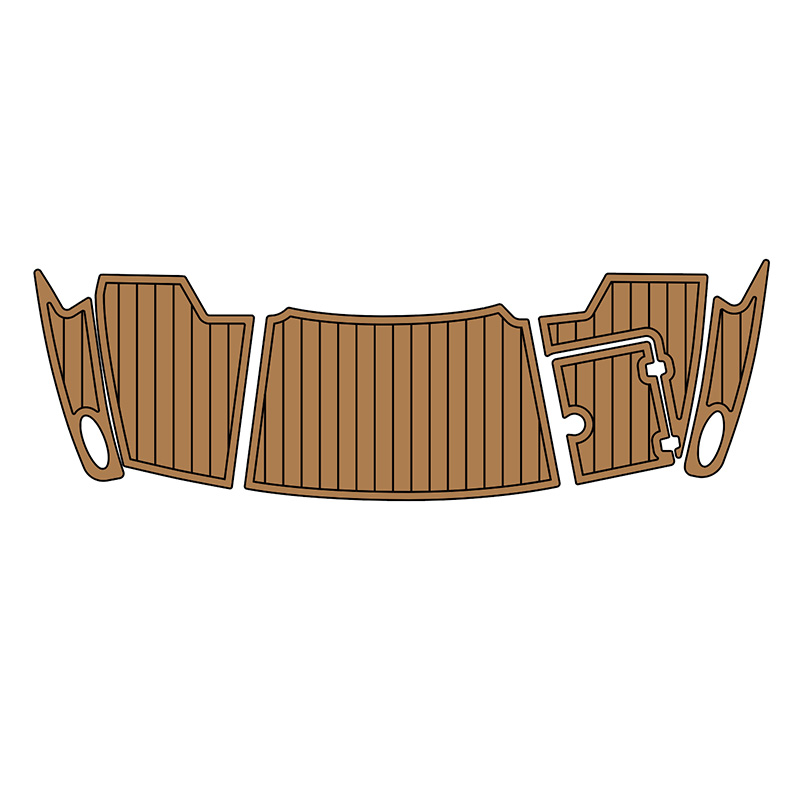 Other
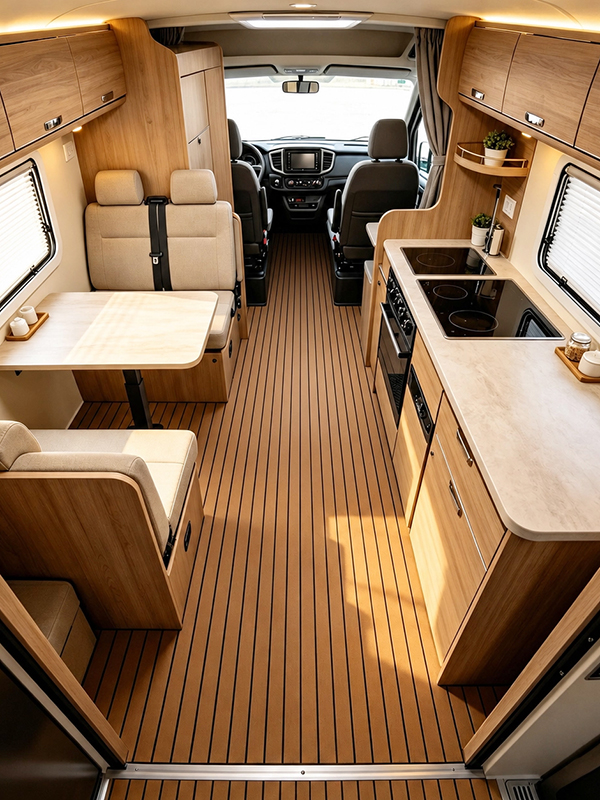 RV & Camper Flooring
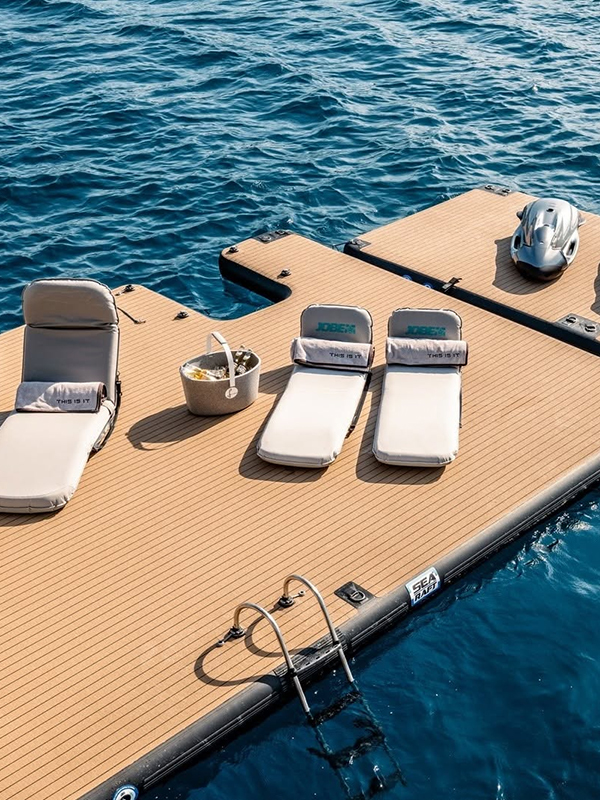 Inflatable Floating Docks
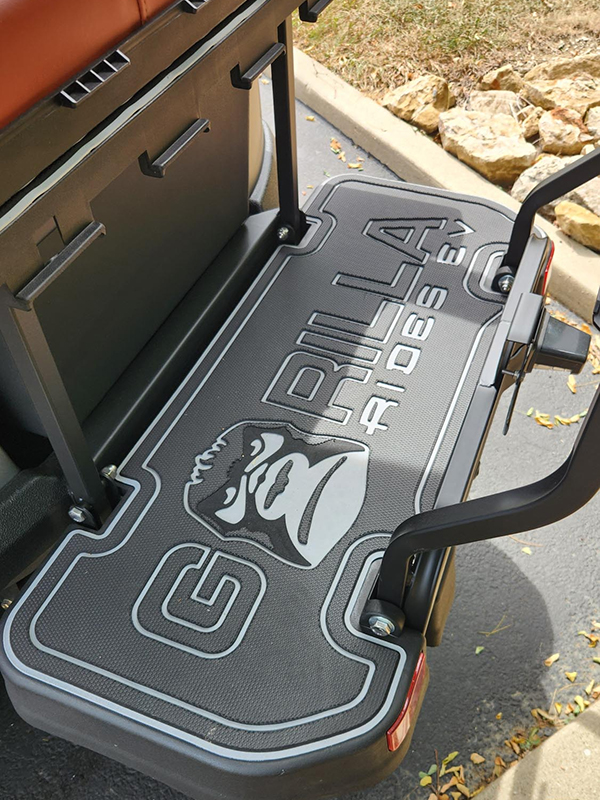 Golf Cart Mats
 Auto Trunk Liners
 Bathtub Anti-Slip Mats
 Stair Treads
 Swim Platform Mats