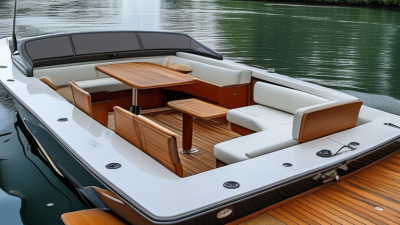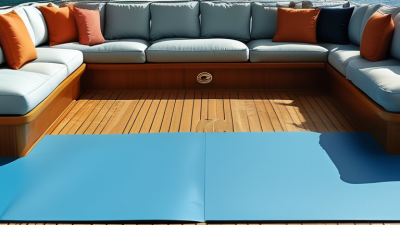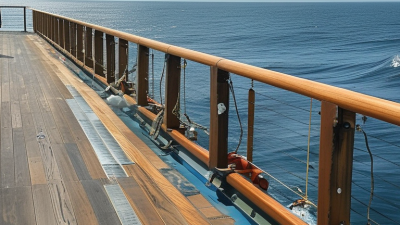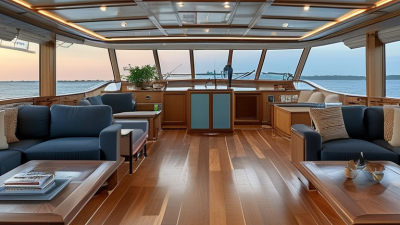
Choosing the right custom Eva boat flooring in 2026 isn’t just about picking a pretty color or looking at surface patterns. You’ve got to dig a little deeper—think about material density, whether it’s a closed-cell design, UV resistance, how much water it absorbs, heat retention, and how well it’s installed. Sure, a deck that looks soft and comfy might feel nice underfoot, but it could wear out pretty fast when you're hauling gear, dealing with wet shoes, or loading the boat onto a trailer day after day.
Marine flooring expert Daniel Harper puts it simply: “The best boat EVA flooring isn’t always the thickest. It’s all about what suits your boat, how much you use it, and how you take care of it.” That’s a really important point. Whether it’s a fishing boat, yacht, pontoon, or personal watercraft, each one has its own unique needs. The deck needs to hit a sweet spot—giving you enough cushioning, good grip, proper drainage, and easy cleaning.
Honestly, real-world testing is what really makes the difference. A trustworthy supplier should be willing to offer samples, share detailed technical info, give you tips about adhesives, and be clear about cutting tolerances. It’s also smart to check how the foam handles heat, saltwater, and repeated pressure or compression. Don’t forget to see if the surface stays stable around tricky spots like consoles, hatches, seat mounts, or where any sharp hardware is installed.
Now, don’t be fooled by looks alone. Many folks get caught up in the aesthetics—like teak patterns, logos, or contrast colors—thinking they tell the whole story. Sure, those details do matter, but what really counts is how the thing performs in real life. Sometimes poor surface prep can lead to lifting or bubbling, even if the EVA material itself’s top-notch. That’s a detail that’s easy to overlook but can make a big difference.
In this guide, I’ve broken down the most suitable custom EVA boat flooring options for 2026. I’ve looked at embossed textures, brushed finishes, faux teak styles, camouflage patterns, and even custom CNC-cut layouts. No single choice is perfect—ultimately, the best pick depends on honestly assessing how you’ll use it, your installation skills, your budget, and how much ongoing care it needs.
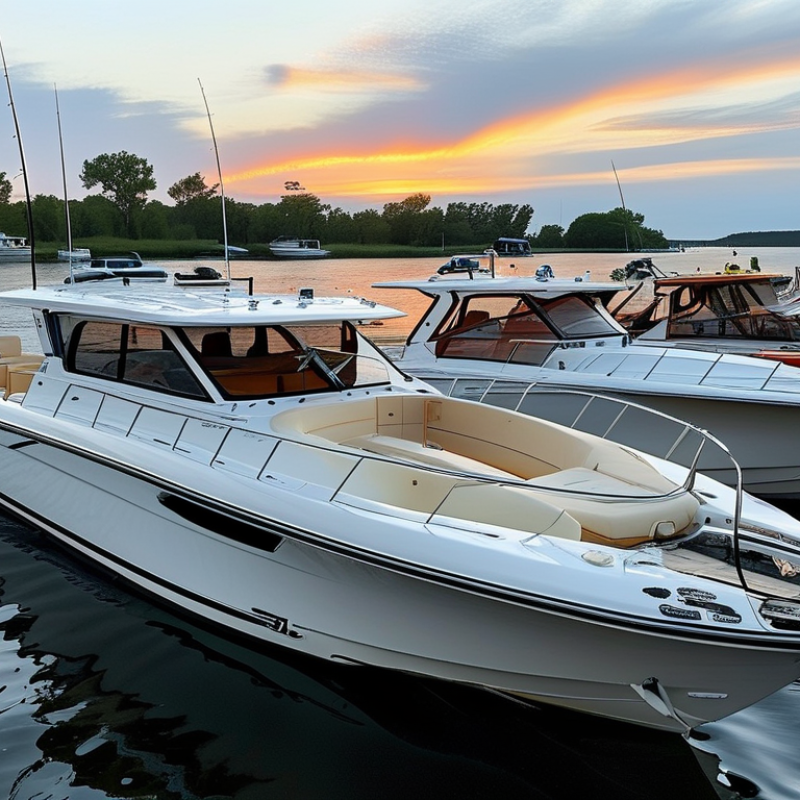
Eva Boat Flooring is a cushioning surface made from closed-cell ethylene-vinyl acetate foam. It is cut into panels, strips, or custom shapes for boat decks. Unlike carpet, this material resists water absorption and dries more quickly after spray or rain. Its textured surface also supports steadier footing around wet seating areas and swim platforms.
The material matters because boat decks face sunlight, saltwater, fish slime, dropped tools, and constant movement. Quality EVA foam can reduce noise from footsteps and soften the pressure under bare feet. I have found that a darker deck may become uncomfortably hot under strong midday sun. Lighter colors feel cooler, but they can show dirt sooner. That trade-off deserves honest attention.
Custom fitting improves both appearance and function. Accurate templates help flooring follow hatch edges, storage lids, and curved corners without blocking access. Strong pressure-sensitive adhesive needs a clean, dry, lightly prepared surface. Installation is not magically simple. Dust, wax, or trapped moisture can cause lifting later. Buyers should check foam thickness, drainage gaps, UV resistance, cleaning requirements, and replacement options. A rigid pattern may look precise online but fit poorly on an older deck. Measuring twice is still sensible.
2026 Best Custom EVA Boat Flooring Types for Buyers
How EVA Flooring Types Differ by Material and Construction
EVA boat flooring is not one uniform product. Its performance depends on foam density, surface texture, thickness, and backing construction. Closed-cell EVA resists water absorption, while softer grades improve comfort under bare feet. Dense foam usually handles frequent foot traffic better, but it can feel less cushioned during long trips.
Material choice affects cleaning and heat response. Brushed or textured surfaces improve grip around wet swim platforms. Fine textures feel smoother, yet may hold more sunscreen and dirt. Laminated EVA can offer a cleaner appearance, but exposed edges need careful sealing. Color also matters because dark sheets may become noticeably hotter in direct sunlight.
Construction determines how well the flooring fits a boat. Solid sheets are practical for simple deck areas. CNC-cut pieces create accurate layouts around hatches, seats, and console bases. Grooved designs help break up water and reduce visible wear. Self-adhesive backing saves installation time, but only on a dry, degreased, properly prepared surface.
I have seen attractive flooring lift because installers rushed surface preparation. That mistake is easy to overlook. Buyers should request density, thickness, adhesive details, and slip-testing information before ordering. A precise template is equally important. Small measurement errors can leave gaps around curved edges, where sand and moisture collect. No option is perfect. The best choice matches the boat’s traffic, climate, storage habits, and maintenance routine.
How EVA flooring types differ by material and construction
Typical non-brand specifications are shown for commonly used marine EVA flooring constructions. Molded and high-density cross-linked EVA generally provide greater thickness and compression resistance, while laminated EVA combines a decorative wear surface with a supporting backing layer. Actual specifications vary by supplier and application.
Custom EVA boat flooring is moving beyond simple gray pads. In 2026, many buyers prefer teak-look patterns, geometric layouts, and two-tone color combinations. These styles create a finished deck without adding the weight of natural timber. Closed-cell EVA foam also offers cushioning underfoot, useful during long fishing trips or family outings.
From practical fitting experience, laser-cut panels remain popular because they follow curved hatches and uneven deck sections closely. Full-deck coverage gives a clean appearance, while modular panels make removal and replacement easier. Drainage channels deserve careful attention. Small grooves can guide water toward scuppers, but poor alignment may leave wet spots. Measure twice.
Color choice is becoming more personal. Sand, brown, charcoal, and light gray can match different hull interiors. High-contrast borders improve visual separation around steps and storage lids. A brushed or embossed surface may provide traction, yet texture alone cannot replace safe boat handling. Test samples under wet conditions before ordering. No pattern is perfect.
Buyers should check foam density, adhesive suitability, UV exposure, and temperature changes before installation. A well-designed custom floor should resist peeling, flattening, and edge lifting during regular use. Still, installation quality matters greatly. Dust, wax, and moisture can weaken adhesion. The most attractive style may fail if the deck preparation is rushed.
2026 Best Custom EVA Boat Flooring Types for Buyers
Matching Boat Eva Foam Flooring to boat areas starts with movement, not appearance. The NMMA’s 2023 U.S. Recreational Boating Statistical Abstract recorded about 11.6 million registered recreational boats in the United States. That scale reflects varied use, from quiet cruising to repeated boarding, fishing, and watersports. A flooring plan should respond to those differences.
Use thicker, high-traction EVA foam on swim platforms, boarding steps, and cockpit lanes. These areas face wet feet, sharp gear, and frequent impact. Closed-cell foam helps resist water absorption, while textured surfaces improve grip under ordinary footwear. On fishing decks, choose darker patterns carefully. They can hide stains, but they may become hot under direct sun. Light tones feel cooler, though they show mud quickly. Real boats demand compromise.
Cabin walkways need softer, low-profile flooring that does not catch toes or obstruct hatches. Helm areas benefit from firm cushioning, especially during long standing periods. The 2023 U.S. Coast Guard Recreational Boating Statistics report listed more than 3,800 reported boating accidents, reminding buyers that stable footing supports safer movement. Flooring cannot prevent every incident. It can reduce avoidable slips.
Measure hatch gaps twice. I learned that lesson late. A beautiful cut can still block drainage or interfere with hardware. Review adhesive compatibility, UV exposure, cleaning chemicals, and seasonal temperature changes before ordering. Industry guidance from the American Boat and Yacht Council also supports treating deck surfaces as part of the vessel’s broader safety design, not merely as decoration.
Custom EVA boat flooring should match the boat’s working conditions, not only its appearance.
Start with accurate deck measurements and a full-size template. Curved edges, hatch openings, seat bases, and drainage channels need careful marking. A small measuring error can create visible gaps or interfere with storage lids. I have found that cardboard templates often reveal problems before material is cut.
Material thickness is another important choice.
Thicker EVA can improve cushioning on hard decks, while thinner sheets may suit tight clearances around doors and hardware. Closed-cell foam helps resist water absorption and simplifies routine cleaning.
Surface texture also matters.
Brushed patterns feel comfortable under bare feet, while diamond or groove textures can provide stronger traction in wet areas. Test samples when possible. Texture preferences are surprisingly personal.
Color and layout require practical judgment.
Light colors reflect heat but show stains more easily. Dark tones hide dirt, yet they can become hot under direct sunlight. Two-tone panels can define walking paths, seating zones, or fishing areas without adding unnecessary decoration.
Custom cutouts around cleats and rails should remain precise, with sealed edges where appropriate. I once underestimated hatch movement, and the flooring needed adjustment after installation. That mistake reinforced a useful lesson: check every moving part before applying adhesive.
Leave room for drainage and inspect the deck surface carefully. Dust, wax, and moisture can weaken bonding.
Choosing custom EVA boat flooring requires more than matching a teak appearance. Safety should come first. Compare the surface texture, wet-grip performance, and edge finish. A well-cut panel should stay flat around hatches and corners. Loose edges can catch shoes, fishing hooks, or cleaning tools. Test samples with wet footwear before ordering. Small details matter.
Comfort is easier to notice during long trips. Eva Teak Boat Flooring can soften hard fiberglass decks and reduce foot fatigue. Check its thickness, density, and heat absorption under direct sunlight. Durability depends on more than foam quality. Strong bonding, accurate templates, UV resistance, and regular inspections all matter. Heavy coolers may leave temporary marks. That is normal, but deep compression deserves attention. No flooring is maintenance-free.
Tips: Rinse saltwater after each trip. Use mild soap and a soft brush. Avoid harsh solvents and stiff wire brushes. Inspect seams every few months, especially near swim platforms and storage lids. Compare replacement costs, not only the initial price. A cheaper sheet may become expensive after poor fitting or early peeling. Reflect honestly on your habits. If sand, bait, and fuel spills are common, choose a darker, textured surface and clean it more often.
Before ordering custom EVA boat flooring, measure the deck, hatches, drains, and seat bases twice. A two-millimeter error can expose fiberglass around a hatch. Create a full-size paper template, then confirm the supplier’s cut file. Ask for closed-cell EVA, adhesive specifications, and surface texture details. Dense foam feels stable under wet feet, while softer foam may compress around pedestal mounts. Eva Boat Flooring Kits should also include labeled panels and installation guidance.
Check performance evidence, not attractive photographs. The U.S. Coast Guard’s 2023 Recreational Boating Statistics recorded 4,064 recreational boating accidents and 556 deaths. Flooring cannot prevent every incident, but secure footing matters around casting decks and swim platforms. Request slip-resistance test conditions, UV-aging results, thickness tolerance, and temperature limits. “Non-slip” alone is too vague. Ask harder questions.
The 2023 Recreational Boating Statistics also listed nearly 12 million registered recreational vessels in the United States, showing the scale of real-world use. Marine flooring faces sunlight, salt spray, fish oils, and repeated cleaning. Confirm whether the adhesive has been tested on your deck material, especially painted aluminum or textured fiberglass. Review a physical sample under direct sun. Color can change. Drainage needs attention too; blocked channels leave dirty water beneath the foam. I would also request installation references, batch information, and a replacement policy. Some suppliers provide excellent cutting, but their adhesive documentation remains weak. That gap deserves scrutiny before payment.
Comparison of common custom EVA marine flooring formats and the main specifications buyers should confirm before placing an order.
| Custom EVA Flooring Type | Typical Thickness | Surface and Appearance | Best-Suited Boat Areas | Customization Options | Drainage and Cleaning | Installation Characteristics | What Buyers Should Check Before Ordering |
|---|---|---|---|---|---|---|---|
| Flat EVA Sheet Flooring | Commonly 6–10 mm; thicker options may be available for added cushioning. | Plain, lightly textured, or two-color laminated surface. Simple appearance with continuous coverage. | Decks, cockpit floors, swim platforms, and larger areas with relatively simple shapes. | Sheet size, color combination, thickness, logo-free geometric patterns, edge shape, and cut-out locations. | Depends on the surface pattern. Grooves or channels may be added to direct water away from the standing area. | Requires accurate templates and careful trimming. Large sheets can reduce seams but may be more difficult to position. | Confirm final sheet dimensions, seam locations, adhesive compatibility, and whether the material is closed-cell EVA foam. |
| Brushed or Teak-Look EVA Flooring | Commonly 6–10 mm. | Wood-grain or teak-style visual lines created through color contrast and surface routing; does not provide real wood construction. | Walkways, cockpit areas, bow sections, swim platforms, and recreational boats where appearance is important. | Base color, accent color, faux-plank direction, border layout, seam spacing, rounded corners, and custom cut-outs. | Grooved surfaces can help channel water, but the groove direction and outlet paths must match the deck design. | Pre-cut panels are usually easier to align than one large sheet. Plank direction should be confirmed before production. | Request a digital proof showing plank direction, border width, color contrast, and the position of every hatch and fitting. |
| CNC-Cut Custom Panel Flooring | Commonly 6–12 mm, depending on cushioning and clearance requirements. | Precision-cut panels with defined borders, routed grooves, hatch openings, and complex contours. | Irregular decks, consoles, engine covers, steps, seating bases, and boats with many fittings. | CAD-shaped outlines, panel numbering, routed patterns, lettering, non-slip textures, and openings for hardware. | Good when correctly designed. Grooves and panel gaps can be planned around drainage points and removable hatches. | Panels are generally easier to install and replace individually. Installation still depends on accurate boat measurements. | Verify the template source, measurement tolerance, panel numbering, cut-out clearances, and whether removable panels remain accessible. |
| Die-Cut EVA Flooring Kit | Commonly 6–10 mm. | Factory-cut parts supplied as a coordinated set, often with repeated shapes and matching borders. | Production boat layouts, standard-size decks, fishing boats, and applications requiring repeatable installation. | Panel dimensions, colors, surface patterns, edge profiles, hole positions, and kit labeling. | Performance depends on the selected pattern. Pre-planned grooves may improve water movement and simplify cleaning. | Fast installation when the supplied kit matches the boat exactly. Incorrect measurements can affect the entire kit. | Confirm the boat model and revision, template date, part count, panel labels, and replacement availability for individual pieces. |
| Modular EVA Tile or Panel Flooring | Commonly 6–12 mm. | Separate square, rectangular, or shaped panels with visible joints; practical rather than fully seamless. | Utility decks, workboats, fishing areas, storage zones, and boats where damaged sections may need replacement. | Tile dimensions, color combinations, joint layout, surface texture, edge strips, and removable access sections. | Joint layout is important. Gaps can assist access and drainage but may collect dirt if poorly designed. | Usually easier to handle and replace than large sheets. More joints may require additional cleaning and alignment. | Check joint width, edge finishing, panel movement, water flow beneath or between panels, and access to inspection points. |
| High-Texture Non-Slip EVA Flooring | Commonly 6–10 mm; select thickness according to clearance and cushioning needs. | Raised, embossed, or aggressively textured surface designed to increase grip in wet-use areas. | Bow casting decks, boarding areas, swim platforms, steps, and sections exposed to frequent water or spray. | Texture level, color, panel shape, border treatment, drainage grooves, and cut-outs for hardware. | Textured surfaces can improve wet traction, but deep patterns may retain sand, fish residue, or other debris if not rinsed regularly. | Works best on clean, smooth, dry substrates. Strong texture may make alignment and edge trimming more noticeable. | Ask for wet-slip test information where available, confirm cleaning requirements, and check that the texture is comfortable for bare feet. |
| Removable Hatch and Access-Panel Flooring | Commonly 6–10 mm, subject to hatch clearance and hinge design. | Flooring is divided around lids, hatches, fuel access points, inspection ports, and storage compartments. | Engine compartments, livewells, storage lockers, fuel access areas, and decks requiring frequent maintenance access. | Split lines, pull tabs, hinge clearances, magnetic or mechanical retention, panel numbering, and edge sealing. | Allows access for cleaning and maintenance. Drainage must not be blocked by flooring edges or adhesive. | Panels should be removable without damaging the surrounding flooring. Clearance must account for opening movement. | Confirm hinge swing, lid removal direction, finger clearance, fastener access, panel weight, and whether adhesive is needed on removable sections. |
| Two-Layer or Laminated Color EVA Flooring | Commonly 6–10 mm overall, depending on the construction. | Contrasting top and bottom layers allow routed patterns, borders, lettering, or decorative lines to show through. | Visible cockpit floors, premium recreational layouts, center consoles, and custom visual designs. | Top-layer color, base-layer color, routed depth, border width, pattern scale, text, and panel arrangement. | Drainage depends on the routing design. Decorative lines alone do not guarantee effective water evacuation. | Requires an approved proof because routed depth and pattern scale affect the final appearance and wear visibility. | Confirm color consistency, routed depth, pattern orientation, UV-stability information, and how the appearance changes after wear. |
flooring?
Choose low-profile flooring for cabin walkways, so toes and hatches remain clear. Use firmer cushioning at the helm for longer standing periods. Comfort matters there.
Dark patterns hide stains from bait, mud, and fish oils. However, they may become hot under direct sunlight. Light colors feel cooler but show dirt quickly. Real compromise.
EVA foam softens hard fiberglass and reduces foot fatigue during extended trips. Compare thickness, density, and heat absorption before ordering. Softer foam may compress near pedestal mounts.
Measure the deck, hatch gaps, drains, and seat bases twice. Create a full-size paper template and check the cut file carefully. A tiny error can expose the deck or block drainage.
Compare wet-grip performance, surface texture, thickness, and edge finishing. Test samples with wet footwear before committing. Loose edges can catch shoes, hooks, or cleaning tools.
Rinse away saltwater after each trip. Use mild soap and a soft brush. Avoid harsh solvents and wire brushes. Inspect seams near swim platforms and storage lids every few months.
Confirm adhesive compatibility with painted aluminum or textured fiberglass. Ask about UV exposure, temperature limits, thickness tolerance, and aging tests. Inspect a sample under direct sunlight. Documentation can be incomplete.
No flooring can prevent every incident. Secure footing can reduce avoidable slips around wet boarding areas and casting decks. Keep drainage channels open, because trapped water leaves dirt beneath the foam.
Choosing the right Custom Eva Boat Flooring can improve a boat’s safety, comfort, appearance, and long-term usability. This guide explains what EVA flooring is, how foam density, surface texture, backing, and construction methods affect performance, and which styles are popular for boats in 2026. Buyers will learn how to select suitable flooring for decks, cockpits, swim platforms, fishing areas, and high-traffic zones based on intended activities and exposure to water, sunlight, and dirt.
The article also reviews customization options such as colors, patterns, textures, thicknesses, logos, borders, and precision-cut shapes. It compares important factors including slip resistance, cushioning, durability, cleaning requirements, heat management, and installation convenience. Before ordering, buyers should confirm measurements, templates, material specifications, adhesive compatibility, drainage needs, color expectations, warranty terms, and maintenance instructions to ensure the finished flooring fits properly and performs reliably.